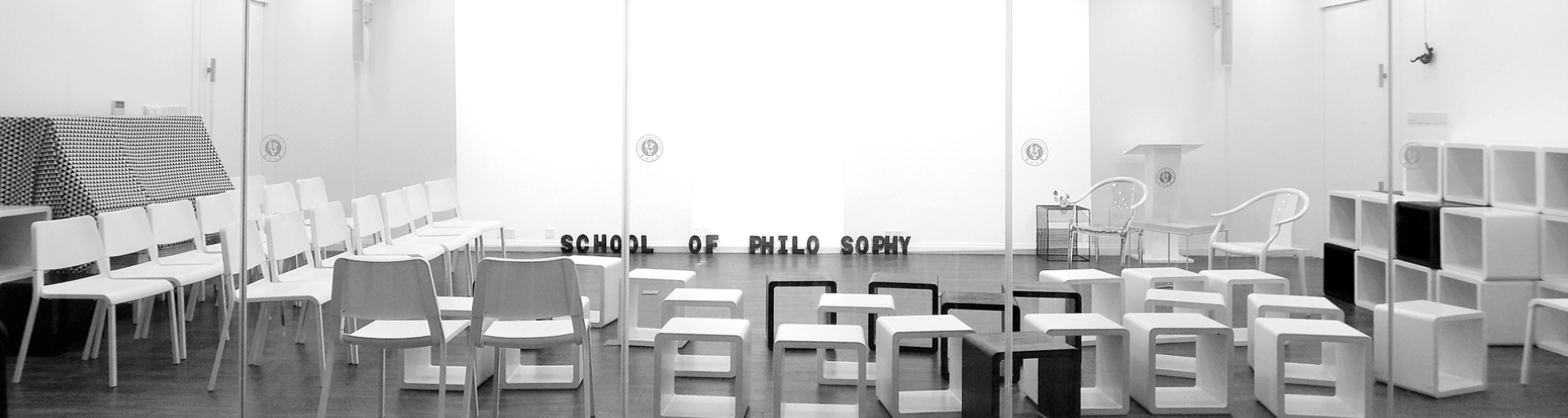
The collaboration between the School of Philosophy at Fudan University and the École des Hautes Études en Sciences Sociales (EHESS) in France has recently resumed. A student exchange program is set to launch next semester. Below is a brief introduction to EHESS.
EHESS brings together researchers and students from around the world with the aim of promoting collaboration across all disciplines of the social sciences in order to understand complex social phenomena. Since becoming an independent institution in 1975, EHESS has fostered interdisciplinary dialogue among disciplines such as history, sociology, anthropology, economics, philosophy, geography, literary studies, psychology, and cognitive science.
The institution comprises 40 research units, organized around specific fields, methodologies, or (in one-third of cases) “cultural areas” such as South Asia, Oceania, the African world, the Russian and Caucasian world, the Americas, and the Islamic world. More than 800 teaching and research staff are involved in these units, developing scholarship and supervising master’s and doctoral students, supported by nearly 500 administrative and technical research personnel. The EHESS publishing house also plays an active role in disseminating the institution’s academic output.
EHESS’s teaching is based on the principle of “learning through research.” Unlike traditional lecture-based instruction, teaching at EHESS is organized primarily through seminars, which emphasize direct knowledge exchange between students and instructors around ongoing research. Its interdisciplinary structure for research and teaching distinguishes EHESS from conventional universities. Approximately 3,000 master’s and doctoral students benefit from highly individualized supervision. The institution offers over 1,000 seminars spanning 80 thematic and disciplinary areas, enabling students to build personalized learning paths.
The Master’s in Humanities and Social Sciences program includes 17 disciplinary and 12 interdisciplinary tracks, opening up diverse career opportunities — not only in academia and research but also in journalism, communication, publishing, international cooperation, and the cultural sector.
EHESS is part of a dense global network of researchers and institutions, maintaining long-term cooperation and exchange with international partners. This strong international orientation is reflected in its more than 65 partnership agreements with foreign universities and research institutions. Each year, EHESS hosts around 150 visiting professors, creating a unique platform for global scholarly exchange in the humanities and social sciences. Research and teaching take place within the institution’s distinctive research environment, with one-third of the units focusing on major “cultural areas” (such as South Asia, Oceania, and the African world). Nearly 50% of its master's and doctoral students are international. To promote knowledge exchange, EHESS invests considerable resources in supporting students and faculty conducting academic work in research fields around the world.