Opening Ceremony
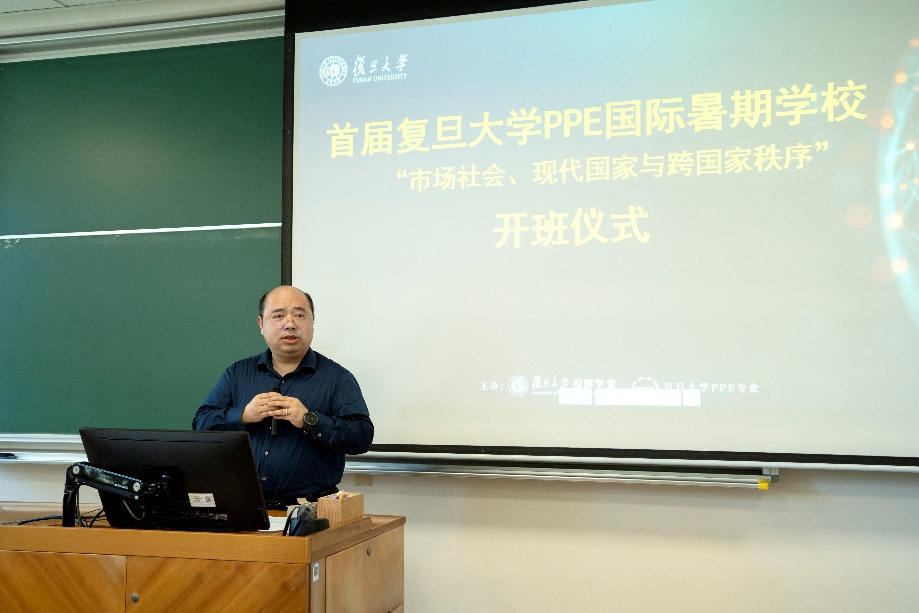
On the morning of 30 June 2025, the inaugural Fudan University PPE International Summer School, entitled‘Market Society, Modern State and Transnational Order’, commenced in Room 106 of the West Annex Building, Guanghua Tower, Handan Campus, Fudan University. This summer school was jointly organized by the Xianghui Academy and the PPE Programme at Fudan University. The programme attracted over 40 outstanding students from leading universities worldwide, representing diverse academic backgrounds including political science, economics, philosophy, and related disciplines.The opening ceremony was chaired by Professor Qi Tao, Associate Professor at Fudan University's School of Philosophy and Deputy Director of the Fudan University PPE Programme Committee.
Professor Lin Wei, Dean of the Academic Affairs Office at Fudan University, delivered the opening address on behalf of the institution. He noted that against the backdrop of profound global transformation, this summer school would focus its teaching and research on the theme of ‘Market Society, Modern State and Transnational Order’, bringing together global wisdom to address the challenges of our era. This programme exemplifies Fudan's achievements in educational reform. As a specialized zone for cultivating elite innovative talents, the Xianghui School emphasizes multidisciplinary integration and international alignment. Fudan's PPE programme, underpinned by three A+ disciplines including Political Science, Economics and Philosophy, has admitted four cohorts of interdisciplinary undergraduates since 2022, dedicated to nurturing top-tier academic talents across disciplines. He expressed his hope that participants from across the globe would cherish this five-day learning opportunity, engage in active exchange and exploration, and enhance their academic literacy and comprehensive capabilities. He extended his best wishes for the summer school's complete success, smooth delivery of lectures by scholars, and for students to achieve academic progress and forge lasting friendships.
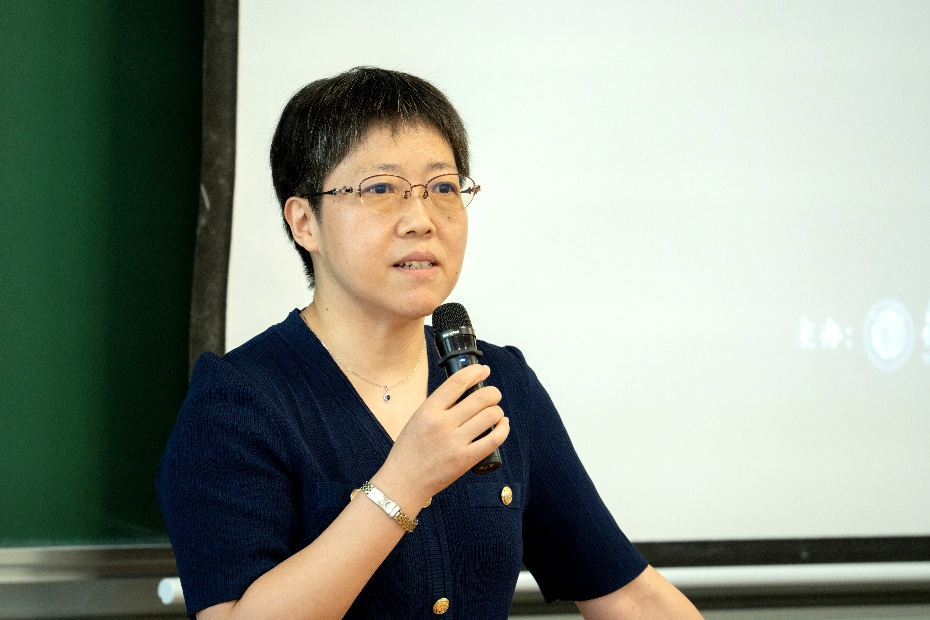
Afterwards, Professor Zhang Shuangli, Dean of the School of Philosophy at Fudan University and Chair of the Fudan University PPE Programme Committee, noted that while Fudan's PPE programme commenced later than those at other Chinese institutions, it has demonstrated formidable disciplinary strengths by leveraging the academic resources and faculty expertise of Fudan's three Ministry of Education A+ disciplines: Political Science, Economics, and Philosophy. She further observed that discussions with various scholars revealed substantial challenges persist in establishing an outstanding PPE programme within China. Firstly, there is the question of how to motivate scholars from three distinct disciplinary backgrounds to embrace an interdisciplinary perspective and reshape their academic outlook. Secondly, unlike the Western context where PPE programmes are often geared towards cultivating political leaders and enjoy high societal recognition for producing relevant professionals, Chinese PPE students frequently require further academic qualifications to enhance their scholarly credentials and gain societal validation. Finally, concerning the operation of Fudan's PPE programme, the university has provided substantial support. The PPE team has recruited senior professors from all three disciplines to design curricula that actively engage with pressing societal issues. Professor Zhang Shuangli emphasized the importance of interdisciplinary backgrounds and diverse perspectives, noting that the summer school represents an opportunity for deep disciplinary integration. She welcomed more students from home and abroad to join future academic exchanges and actively respond to contemporary social realities.
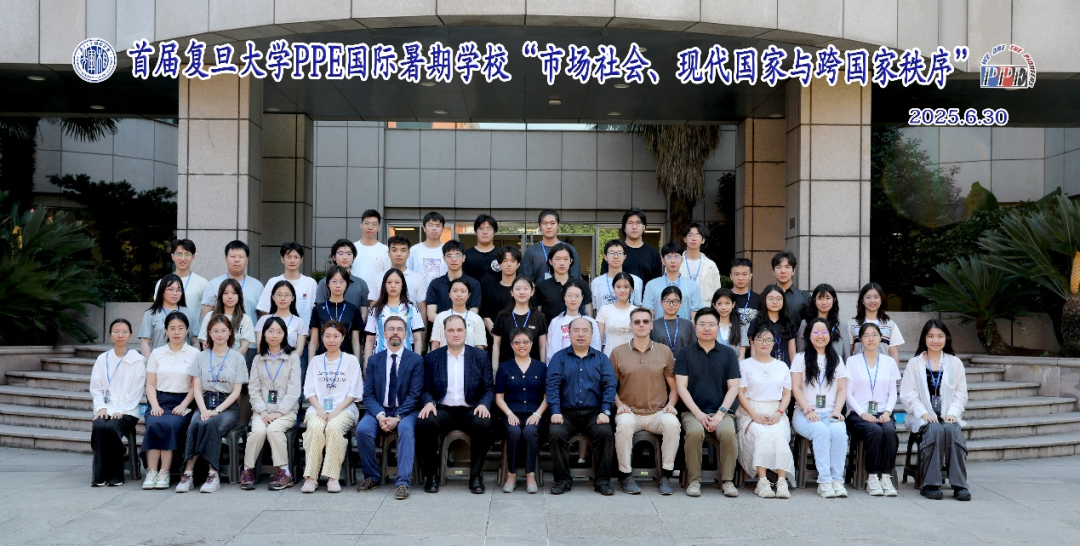
After the opening ceremony, all the participants took a group photo together. With this, the first Fudan University PPE Summer School officially kicked off. Subsequently, a series of in-depth teaching and exchange activities will be carried out around the theme.
Professor Mikhail Mironyuk from the National Research University for Economic Development of Russia delivered an enthusiastic lecture titled "Three Decades of Rising (Falling?) World (Dis)order (According to the Project 'Political Atlas of the Modern World 2.0')". Relying on the "Modern World Political Atlas 2.0" project, this lecture focused on the changes in the world order over the past three decades,delving into the conceptualization, operationalization, and measurement methods of state power, combiningthese concepts with historical and real-life cases, to deeply analyze the dynamic evolution of the global power structure.
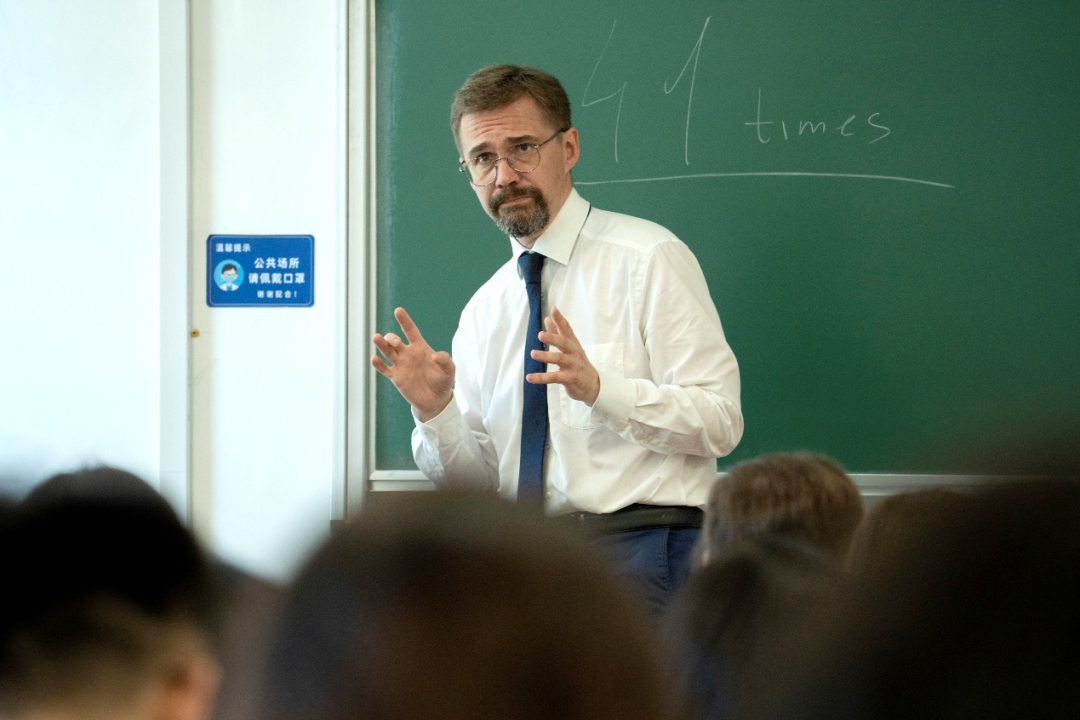
At the outset of the lecture,Professor Mikhail Mironyuk began by examining the structural transformation of the world order.He noted that over the past three decades, the global order has shifted from the unipolar structure of the 1990s to the early 21st century toward today's polycentric configuration. However, such qualitative insights require quantitative methods to accurately gauge the scale of these changes. Significant academic debate persists regarding the core drivers of this transformation and the future trajectory of the global power structure—precisely the central questions the “Modern World Political Atlas 2.0” project seeks to address.
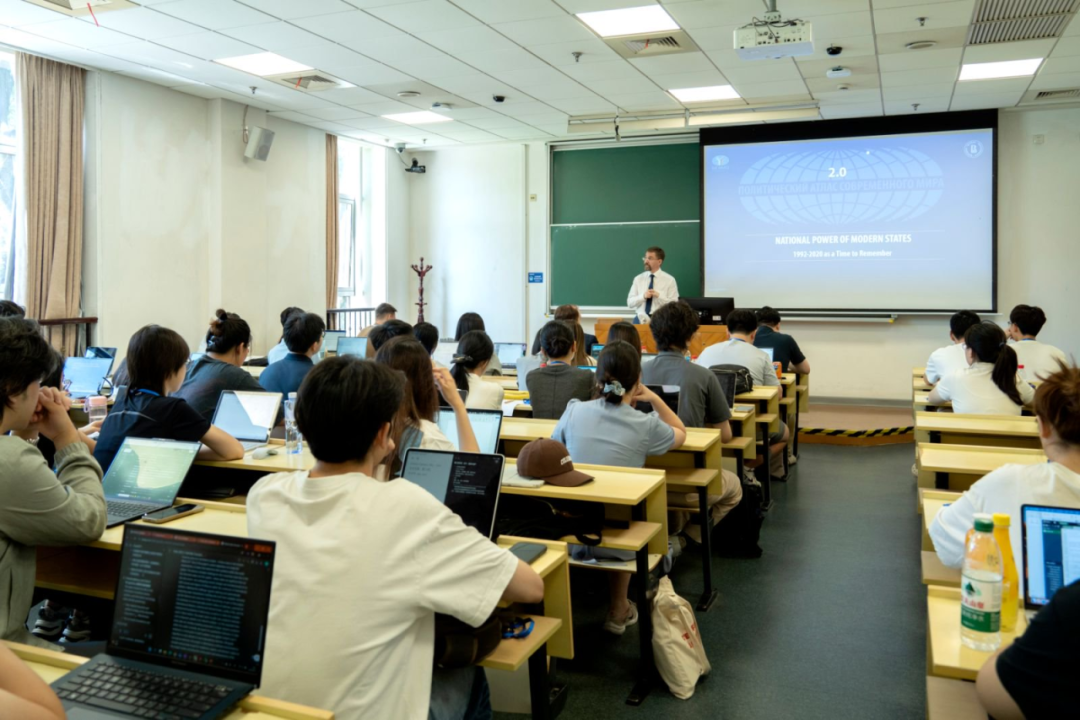
When conceptualizing state power, Professor Mikhail Mironyuk emphasizes that the relationship between power and influence is indirect and contextual: scenarios exist where “power exists without influence” or “influence exists without power.” Drawing on traditional political science theory, he points out that power does not reside solely within states but also manifests in inter-state relations. For instance, during the Napoleonic Wars, France possessed formidable military strength (power) yet failed to achieve its intended influence due to counterbalancing forces within the anti-French coalition. Conversely, Israel, despite lacking the resources and military scale of the United States, has demonstrated the ability to shape American policy in the Middle East through strategic maneuvering—a classic example of “influence transcending power.”
Regardingthe relationship between power and resources, he posed a crucial question: Can political will and strategic wisdom compensate for resource deficiencies? Historical cases provide an affirmative answer. When Germany invaded the Soviet Union in 1941, its initial military superiority was evident, yet it suffered a crushing defeat at the Battle of Stalingrad—the Soviet people's resolve to resist and strategic resilience overcame the initial disadvantages in resources and military deployment. In contrast, France in 1940, despite possessing Europe's most formidable land forces, surrendered just two weeks after the German invasion due to a lack of fighting spirit. These cases demonstrate the compensatory role of will and strategy in power dynamics.
Regardingpower measurement, Professor Mikhail Mironyuk notes that any measurement constitutes a “simplification” of reality and must confront the challenge of “immeasurability.” Traditional approaches, such as the formula by R. Cline and F. German ((Territory + Population + Economy + Military Capability) × Strategy and Will) or the quantitative model of the CINC project, all face controversies over indicator selection and weighting. Building upon the experience of the earlier “Modern World Political Atlas,” the “Modern World Political Atlas 2.0” project has established a more systematic operational framework.
The project selected 17 core indicators spanning four dimensions: Economic strength encompasses each country's share of global GDP (PPP-weighted), merchandise exports, R&D expenditure, and electricity generation; Scientific potential includes the proportion of resident versus non-resident patents, share of scientific publications, and proportion of Nobel laureates in natural sciences (excluding Peace and Literature Prizes); Resource endowment involves territorial area, total population, and global share of crude oil and natural gas production; International influence encompasses military expenditure, permanent UN Security Council membership, nuclear weapons possession, and overseas military deployments. All metrics are calculated as “relative values”—for instance, a country's GDP share represents its GDP divided by global GDP, not absolute figures. This reflects power's “relational” nature: even if a nation's absolute strength grows, its relative power may decline if other countries advance faster.
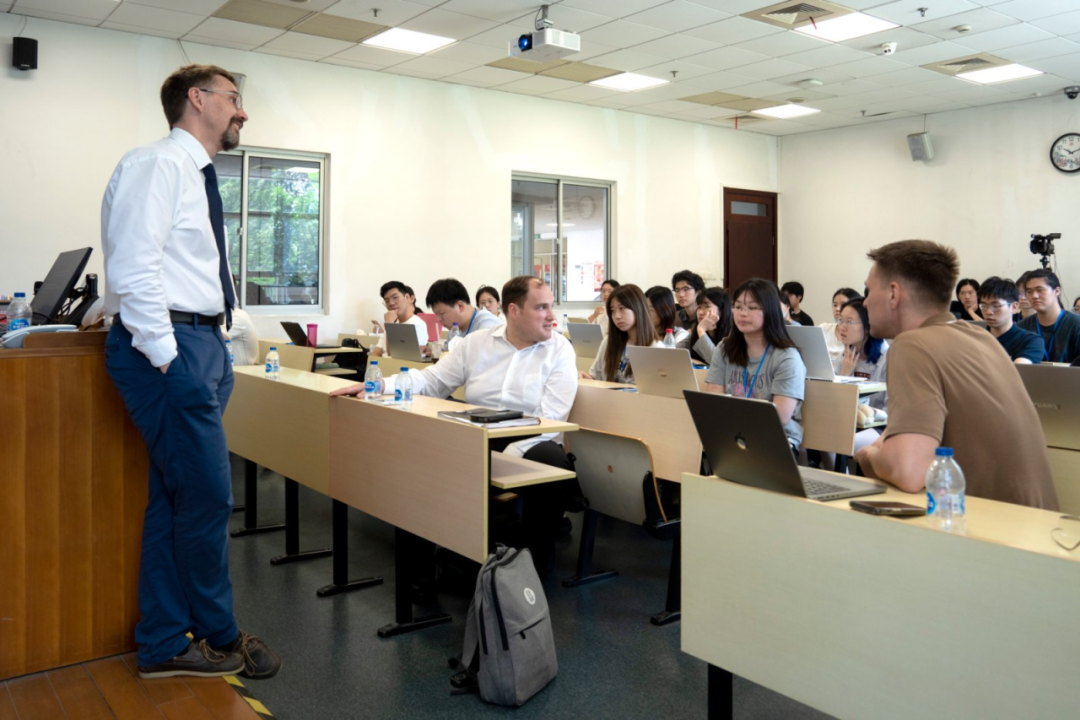
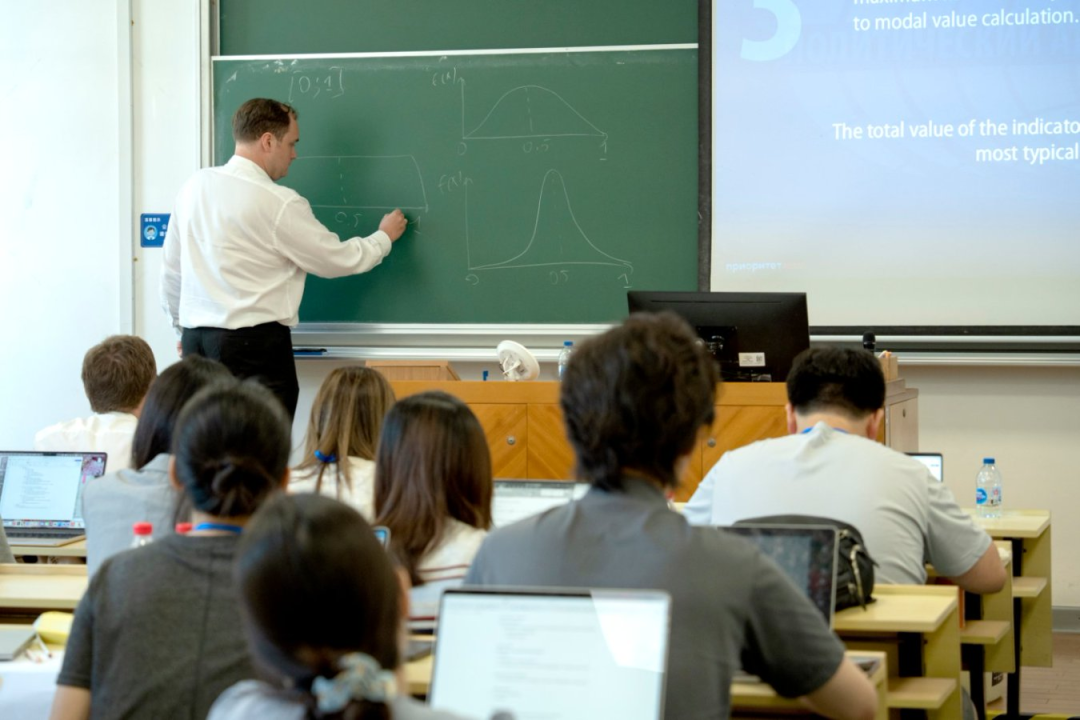
Regarding the measurement methodology, Professor Mikhail Mironyuk invited Professor Evgeny Sedashov, also from the National Research University Higher School of Economics in Russia, to provide a more detailed explanation. The project employs a dynamic weighting system: for each indicator in every year, weights are determined by analyzing the distribution patterns of indicators across countries worldwide (such as the concentration of “leading nations”). Indicators where leadership is harder to achieve (e.g., only 5% of countries reach a certain level) receive higher weights than those where leadership is more attainable (e.g., 20% of countries reach the level). This design aims to highlight the “scarcity of leadership,” making the measurement results more aligned with the dynamics of real-world power competition.
To elucidate the historical logic of power shifts, Professor Mikhail Mironyuk traces the evolution of the global landscape since the modern era. In the early 19th century, following the Napoleonic Wars, Europe entered a nearly century-long period of “relative peace.” Its total economic output grew nearly sixfold, with its share of global GDP rising from 23% to a peak. During this same period, the U.S. population stood at just 10 million (less than 1% of the world's total), and its economic share remained below 5%. By 1913, the U.S. economy had grown to 10.9% of global GDP—a 41-fold expansion in economic scale over a century, accompanied by nearly tenfold population growth—demonstrating an “unconventional pace” of power ascent.
The two world wars of the 20th century reshaped the global landscape: Europe's economic share declined significantly, while the United States established unipolar dominance through its economic and military superiority. From 1990 to 2020, global GDP grew by 3.7 times. China's economy rose at a pace that took the United States a century to achieve but China accomplished in mere decades—from accounting for just 1.8% of global GDP (in U.S. dollar terms) in 1990 to approaching U.S. levels by 2020. This growth rate stands as unprecedented in modern economic history.
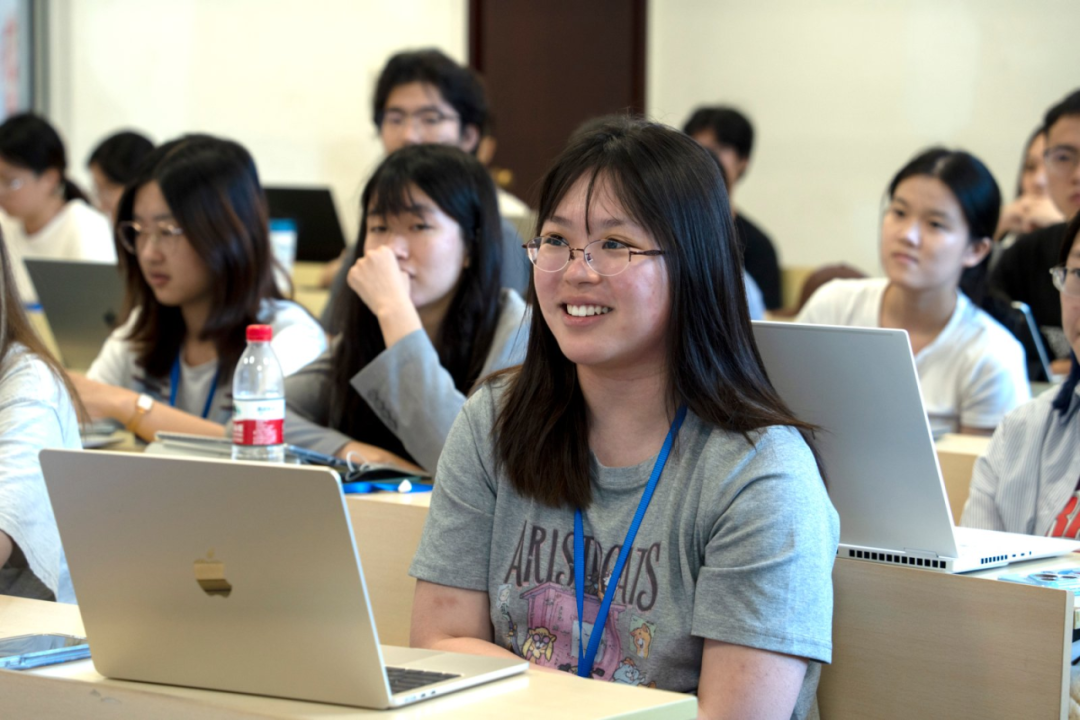
Quantitative findings from the project reveal a pronounced trend toward multipolarity in the global power landscape over the past three decades: While the United States retains the largest share, its relative power has declined by 17%; China's power index has continued to climb, establishing it as the world's second-largest power; European nations collectively declined, with traditional powers like Germany and France wielding less than half the influence they held in the 1990s; emerging economies such as India and South Korea steadily increased their share of global power. This transformation confirms the trend of “de-Eurocentrism”—the 19th-century Europe-centric order is being replaced by a multi-polar structure. Crucially, this transition has unfolded without global warfare, starkly contrasting with the turbulent shift of hegemony from Britain to the United States during the 20th century.
Professor Mikhail Mironyuk particularly emphasized that shifts in power are not merely quantitative changes in economic and military strength, but also involve qualitative transformations in “will” and “strategy.” For instance, although Russia's economic scale falls short of China and the United States, it maintains critical global influence through its nuclear deterrence strategy and resource control capabilities. Conversely, the European Union has failed to translate its economic mass into commensurate political influence due to the inefficiency of its internal coordination mechanisms. These cases demonstrate that measuring state power requires balancing “hard metrics” with “soft factors.” The value of the “Modern World Political Atlas 2.0” project lies precisely in providing quantifiable, dynamic analytical tools for such complex shifts.
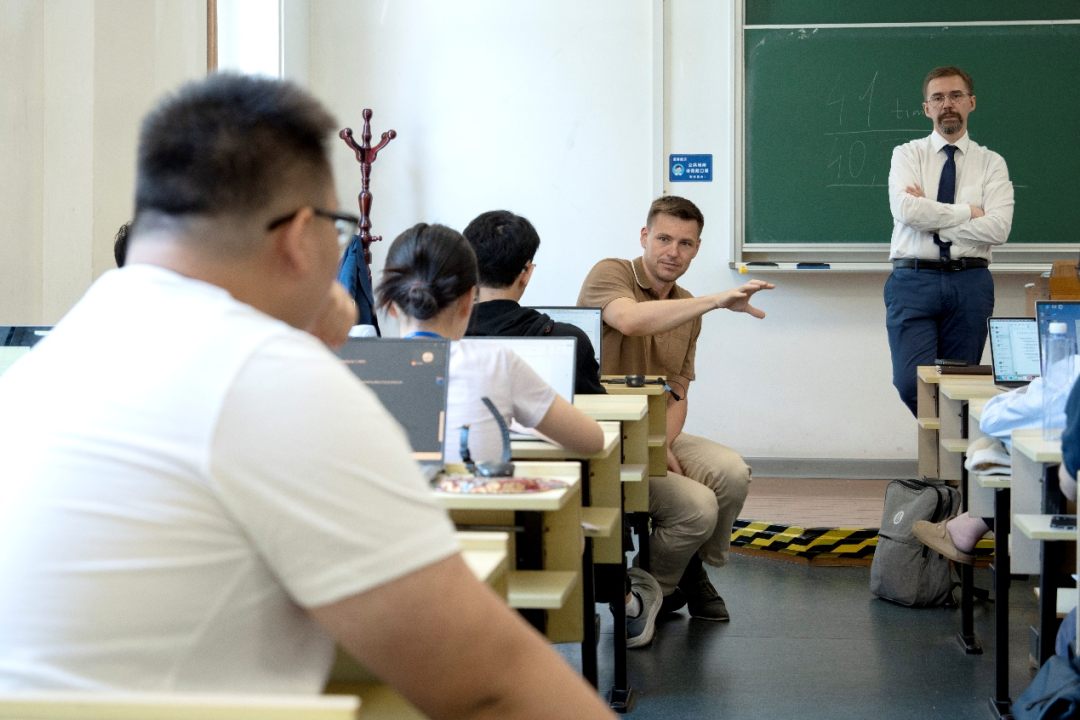
Throughout the lecture and afterward, participants actively engaged with the professor, their enthusiasm for academic exchange evident. At the conclusion, Professor Mikhail Mironyuk summarized that the transformation of the global order over the past three decades resulted not only from economic and technological progress but also from strategic choices and collective will. Research from the “Modern World Political Atlas 2.0” project indicates that multipolarity is not synonymous with “disorder,” but rather a “new order” characterized by a more balanced distribution of power. Its stability hinges on nations' ability to recognize and adapt to relative power dynamics. This lecture, blending historical depth with quantitative rigor, offered participants a fresh perspective on understanding the global landscape and laid the groundwork for subsequent interdisciplinary discussions.
Lecture II | The Past, Present, and Future of Economics
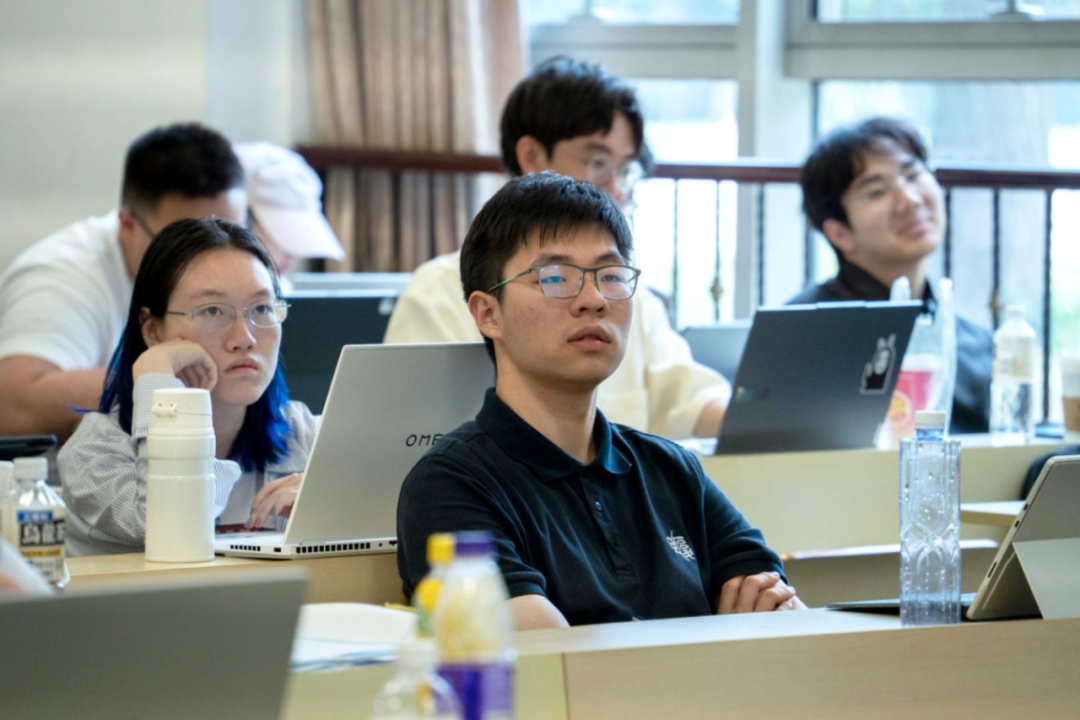
On the afternoon of June 30, Professor Tian Suhua from the School of Economics at Fudan University delivered a lecture titled “The Past, Present, and Future of Economics.” The session began by examining 2024 macroeconomic data from China and the United States alongside China's 2025 economic development targets, comparing the two nations' GDP totals and per capita levels, inflation rates, foreign investment, and import-export trade.
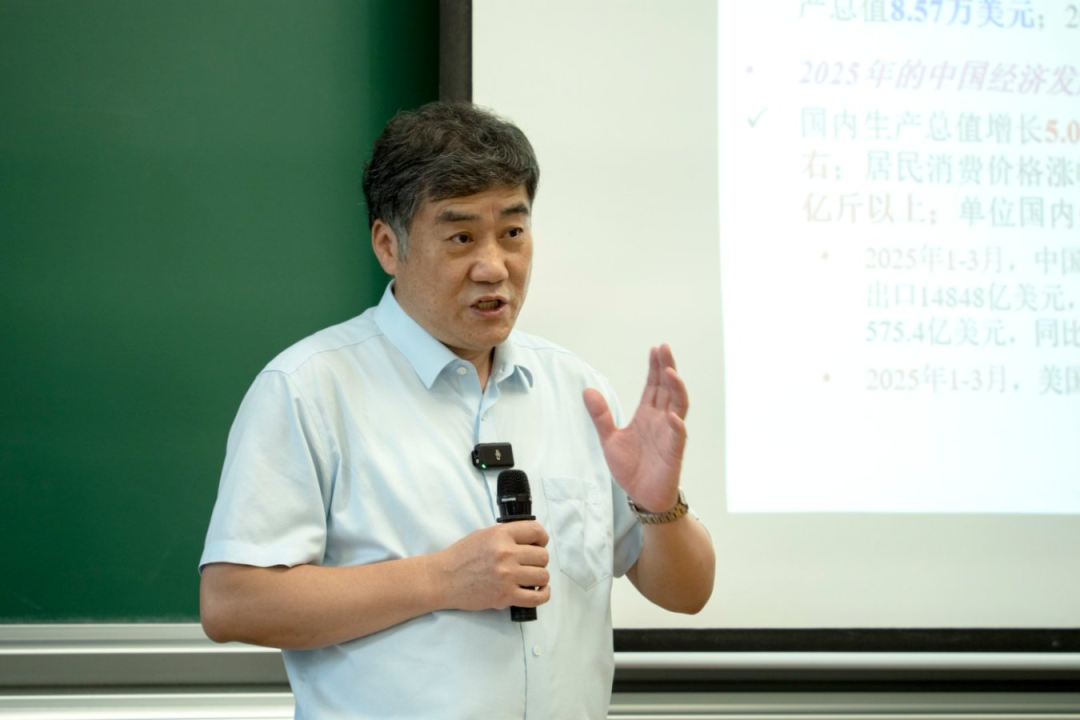
The global economy has undergone significant transformations over the past few decades, and economics has continuously evolved alongside shifts in social and political environments. Looking back at the history of economics, it can be divided into several key theoretical revolutions. The first revolution, driven by Adam Smith's theories of free markets and the division of labor, emphasized the market's inherent ability to spontaneously regulate supply and demand. John Stuart Mill then conducted the first comprehensive synthesis of economic thought. With industrialization, the marginal revolution introduced mathematical methods to economics, forming three equilibrium paradigms. Marshall's synthesis gave birth to the first microeconomic system, solidifying economics as a discipline. The Keynesian revolution shifted focus from micro to macro levels, rejecting laissez-faire dogma by asserting markets are not omnipotent and emphasizing the importance of state intervention. The Samuelson Synthesis integrated Keynesian macroeconomics with neoclassical microeconomics, proposing a mixed economy. Entering the late 20th century, addressing issues like post-oil crisis stagflation and the collapse of the Bretton Woods system, the Rational Expectations Revolution marked another major breakthrough in economics. This led to a division within American academia between the Saltwater School, which recognized the limited role of government, and the Freshwater School, which upheld market regulation.
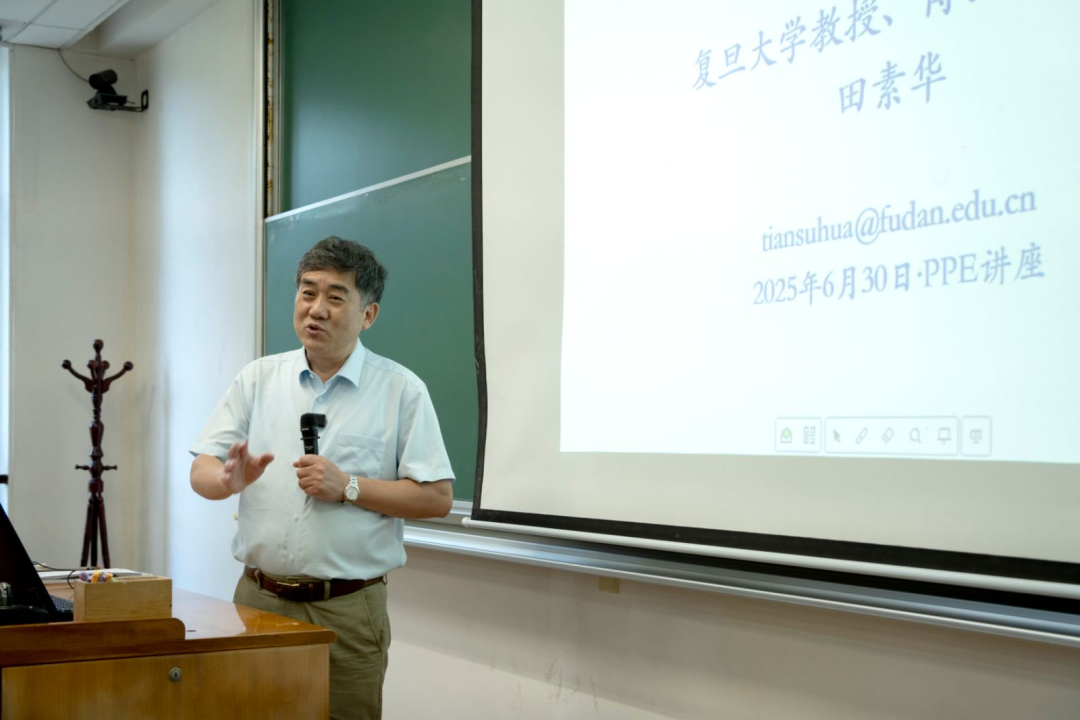
The core driving force of economics stems from the tension between desire and scarcity. Human desires are infinite, while resources are finite, making the “market” an eternal theme in economics. Economics distinguishes between free goods and economic goods: free goods, such as natural resources, are abundantly supplied; economic goods, however, require production activities to obtain them—a process involving factor inputs, technological advancement, and increased production efficiency. The exchange between commodities, between commodities and assets, and between assets themselves forms the core of modern economic activity. These exchange relationships not only drive global economic growth but also bring systemic risks such as financial crises and currency crises, reflecting the high degree of interdependence within the global economy.
Currently, the global economy is confronting a series of challenges. While globalization has facilitated the free flow of capital, technology, and labor, the outbreak of the U.S.-China trade war and shifts in the global trade landscape have fueled the rise of anti-globalization sentiments. The Trump administration has sought to curb China's rise in high-tech sectors through measures such as imposing tariffs, restricting investments, and enforcing technological blockades. These institutional rivalries have profoundly reshaped the global economic order.
Meanwhile, emerging economic models such as the digital economy, platform economy, and sharing economy are transforming global production and consumption patterns. The application of cutting-edge technologies like 5G communications, artificial intelligence, and blockchain not only enhances economic efficiency but also drives profound social change. In the future, economics will transcend traditional theoretical frameworks, placing greater emphasis on interdisciplinary integration to address global challenges such as climate change, social inequality, and global governance.
Innovations in economic research methodologies also open new avenues for the discipline's advancement. Analytical approaches based on big data and machine learning will enable economics to capture patterns and trends in economic activity with greater precision. Simulation analysis methods for economic experiments can help researchers anticipate the potential outcomes of different policy choices. Meanwhile, interdisciplinary research methods will allow economics to understand and explain complex economic phenomena from multiple dimensions. This methodological innovation will empower economics to provide more scientific and effective policy recommendations for addressing global challenges.
In the new wave of major developments in economics, research paradigms have focused on the synergy between efficient markets and effective government, while also revealing the regulatory role of incomplete contracts and informal organizations as a third force in resource allocation—together forming a multidimensional framework for understanding the modern economy. The sustainable development of the global economy demands that economics not only address traditional economic issues but also respond to new global challenges, providing theoretical support and practical pathways for the common progress of human society.