School of Philosophy, Fudan University
VOL.4519
Violence and civilization are inseparable companions. Standing amidst the ruins of the Roman Colosseum, confronting this strange amalgamation of civilization and barbarism, whatever thoughts or sighs may arise, one might feel relief that that era has passed—that civilization seems to have tamed savagery. Yet regrettably, though we have indeed moved far beyond ancient Rome, the Colosseum itself remains ever-present. A series of barbaric or violent phenomena are unfolding right before our eyes. The tension between civilization and violence remains an enduring challenge of our times. Against this backdrop, to foster interdisciplinary dialogue on the complex relationship between civilization and violence, gather diverse perspectives, and comprehensively understand the urgent ethical challenges posed by violence in its various forms, the Center for Global Ethics at Fudan University and the University of Zadar, Croatia, will jointly host the Third Global Ethics Conference at the Inter University Centre Dubrovnik (IUC) from July 25 to August 3, 2025.
Founded in 1972 by Ivan Supek, Rector of the University of Zagreb, its mission was to leverage Yugoslavia's non-aligned status during the Cold War by establishing an independent graduate school and advanced research center to foster collaboration among scholars and students from diverse political, economic, and ideological backgrounds. Not affiliated with any single nation, it functions as a consortium of universities worldwide. Notable scholars including Quine,Ricoeur, Derrida, Habermas, and Apel have lectured or participated in IUC activities. The Korčula Summer School, held on the island of Korčula near Dubrovnik, emerged as one of the 20th century's most significant forums for critical Marxist thought. It attracted thinkers like Bloch, Marcuse, Lefebvre, Fromm, and Ayer, leaving behind many memorable stories. In this place where the spirit of dialogue shines brightly, this conference provides an important intellectual platform for scholars and theorists from around the world to critically analyze and discuss narratives concerning civilization and various forms of violence in today's global society.
Participants in this conference include Professor Deng Anqing, Director of the Center for Global Ethics at Fudan University; Professor Wang Jinlin, Deputy Director of the Center for Global Ethics at Fudan University; Professor Luo Yaling, Deputy Director of the Center for Global Ethics at Fudan University; Professor Jure Zovko from the University of Zadar in Croatia; Professor Xia Ying from Tsinghua University; and scholars from China and abroad who share an interest in and concern for global ethics.

Group photo of participating scholars
The participating scholars began with brief self-introductions and exchanges. During the conference's seminar segment, 14 scholars delivered keynote presentations, followed by in-depth discussions among attendees. Each presentation was followed by approximately one hour of discussion.
First, Deng Anqing from Fudan University delivered a presentation titled “Über die Zivilisation und Barbarei im Sittlichen” (On Civilization and Barbarism in Ethics), delving into the dual nature of ‘civilization’ and “barbarism” inherent within ethics itself. He argued that the normative “justice” of any ethics aimed at sustaining communal coexistence originates from a coercive “primordial force.” In ancient city-state ethics, this force manifested as the suppression of the individual's unlimited personal freedom to ensure the community's survival. Using this as a starting point, the lecture dissected the fragility of modern civilizational order and further explored the fundamental basis for constructing a global coexistence order amid the clash between globalization and anti-globalization. Deng Anqing argued that the cornerstone remains institutional safeguards for individual freedom—namely, perfecting global rule-of-law civilization. Simultaneously, he introduces Hans Jonas's “law of fear,” proposing that in the face of global crises, free individuals must unite their limited forces into a “synergy of coexistence” to form a “power above power” capable of countering the world's barbarization. Transforming the particular ethics of each nation into a global ethic of coexistence is the mission of our time that every scholar bears.

Deng Anqing
Subsequently, Wang Jinlin from Fudan University presented “The Invasive-Constructive Duality of Violence: Civilization, Dialectics, and Revolutions,” exploring the paradoxical nature of violence within human civilization through the perspectives of five major thinkers—Hegel, Marx, Benjamin, Derrida, and Arendt. Drawing on the perspectives of five major thinkers—Hegel, Marx, Benjamin, Derrida, and Arendt—he explored the paradox of violence within human civilization: it is a force that is simultaneously destructive and constructive—establishing new orders while dismantling old ones. Violence is not a linear or inevitable dialectical process, but rather manifests as a complex and contingent force. Professor Wang Jinlin focuses on revolutionary violence, deeply analyzing this paradox through historical cases spanning ancient Rome to the French, Russian, and Chinese revolutions. Even when certain revolutions are deemed historically necessary, they often trigger the slaughter of innocents and lead to uncontrolled tragedies, creating profound ethical dilemmas. Yet they can simultaneously give birth to new social and political forms. Ultimately, Professor Wang Jinlin emphasizes that avoiding the trap of simplistic dialectics requires understanding violence's dual role through a nonlinear, context-sensitive lens. By critically examining both its destructive and constructive dimensions, we can better grasp its role in shaping history while remaining vigilant to its ethical and political implications in our own era.

Wang Jinlin
Xia Ying of Tsinghua University presented a report titled “Critique of Capital's Financialization and Schizoanalysis: An Interpretation of Deleuze and Guattari's Anti-Oedipus.” Xia Ying argues that interpreting Deleuze and Guattari's Anti-Oedipus requires grounding in the real-world context of capital's new form since the 1970s. This new form of capital can be characterized by its tendency toward financialization. This tendency differs from the defining features of financial capital in that, as a form of virtual capital, its entire driving mechanism is the investment of desire containing productive potential. This theory of desire manifests in Deleuze and Guattari's critique of the economics of desire through their discussion of “processual production.” This analytical entry point exhibits textual isomorphism with Marx's discussion of material production in his Economic and Philosophical Manuscripts of 1857-1858. This commonality highlights the shared historical context in which both texts emerged: the formation and development of financial capital. However, Deleuze and Guattari's critique of capital's financialization, developed through their critique of the economics of desire, fails to offer a genuinely transcendent alternative to this capitalist logic. Their appeal to schizophrenic analysis, while capable of deconstructing the basic presuppositions of psychoanalysis, ultimately cannot transcend the logic of capital. It remains, in the end, merely an intellectual image of the trend toward capital's financialization.
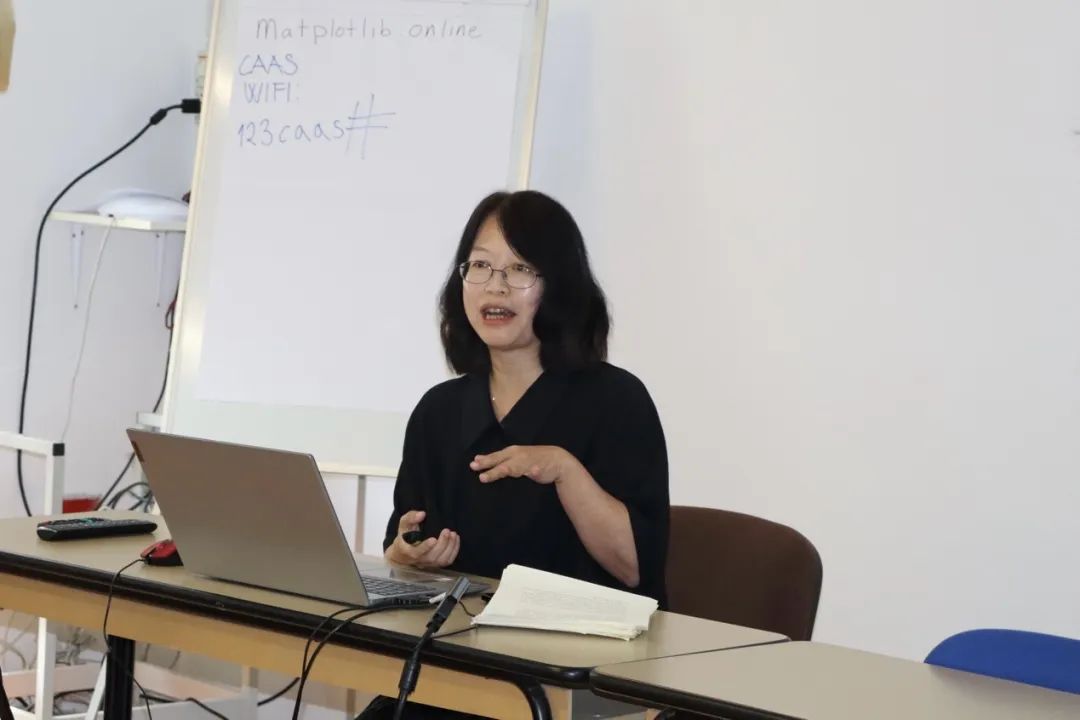
Xia Ying
Laura Angelovsk from the University of Zadar, Croatia, in her report “Rethinking Educational Relationships: Ethics of Care and the Development of Critical Thought,” addressed the alienation and violence arising from neglected emotional needs in contemporary education. She explored the complementary nature of care and critical thinking in education, proposing an educational framework that integrates ethics of care with critical thinking. Inspired by Nel Noddings, she contends that “ethics of care” can foster students' moral sensitivity by building trust and dialogue between teachers and students, thereby creating supportive school communities. Simultaneously, “critical thinking” equips students with the ability to recognize injustice, resist manipulation, and engage in independent thought. Angelovsk ultimately envisions schools as communities of care and thought—spaces that cultivate well-rounded individuals who remain sensitive to others' needs, possess dialogic capabilities, resist violence, and are prepared for responsible social engagement.

Laura Angelovsk
Ivana Renić from the University of Zadar, Croatia, delivered an online presentation titled “Moral Feeling and the Feeling of the Sublime in the Faculties of Cognition.” She conducted a structural comparative analysis of two core emotions in Kantian philosophy: the “reverence for moral law” derived from the Critique of Practical Reason and the “feeling of the sublime” from the Critique of Judgment. Though belonging to distinct moral and aesthetic realms, both emotions share a dual structure of “negation-affirmation.” This structure manifests as the “frustration” of sensuous faculties and the ‘manifestation’ of rational faculties: in the moral sphere, “reverence” arises from the suppression of selfish desires by rational law, a suppression that in turn fosters awareness of the dignity of one's own reason. Similarly, in the aesthetic realm, the “sublime” springs from the imagination's sense of inadequacy before majestic objects; this failure paradoxically highlights the superiority of human reason possessing the concept of the “infinite.” Renić thus concludes that the essence of both emotions does not point to external objects but rather to subjective effects arising from the interaction of internal faculties. Both ultimately affirm the sublime status of human supra-sensible reason through the limitations of sensibility.
Subsequently, Chen Xin from Fudan University presented “Resistance to Thanatopolitics: A Preliminary Study of Canguilhem's Philosophy of Biology,” exploring the framework of resistance to biopolitics centered on Georges Canguilhem's philosophy of biology. “Thanatopolitics,” as the extreme form of biopolitics, reduces life to a manipulable biological concept and systematically excludes or even exterminates groups deemed “pathological” under the guise of ‘treatment’ or “social purification.” To resist this lethal logic, Canguilhem proposed a fundamental rethinking. He first critiques the positivist view that reduces “pathology” to a quantitative deviation from “normality,” emphasizing that these represent fundamentally distinct life structures. The revolutionary aspect of his thought lies in asserting that life itself possesses the capacity to create new norms. Life is not a passive object adapting to its environment but an active process capable of generating new orders. Therefore, so-called biological “errors” (such as genetic mutations) should not be negatively viewed as defects requiring eradication, but rather understood as manifestations of new life orders—proof of life's creative power. Canguilhem's philosophy provides crucial intellectual tools to resist power mechanisms that objectify life, helping us understand life as a free process of continuous self-transcendence.

Chen Xin
Jure Zovko from the University of Zadar, Croatia, presented a report titled “Cosmopolitan Values for the Globalized Age.” Drawing from Kantian philosophy, he explored core value issues in the era of globalization. Professor Zovko argued that in the face of complex global values—such as freedom, equality, and justice—we should apply the principle of Occam's Razor to distill them into two fundamental core values: humanity and dialogue. The value of “Humanity” is rooted in Kantian philosophy, which holds that “human beings should be treated as ends in themselves,” demanding respect for each person's inherent dignity rather than merely as means to other ends. “Dialogue,” meanwhile, serves as the fundamental pathway to realize and safeguard the value of “Humanity.” This dialogue, originating from the Stoic concept of the “Cosmopolitan,” is crucial for fostering mutual understanding and consensus among diverse cultures and civilizations. The essence of dialogue lies in openness and shared exploration. It encourages questioning, responding, and reflection, helping us transcend individual or cultural limitations to collectively arrive at deeper insights. The values of “humanity” and ‘dialogue’ require not only theoretical exploration but practical implementation in education, politics, and international relations. By establishing a “culture of dialogue,” we can resolve conflicts and foster cooperation. Finally, Zovko emphasizes that philosophy's contemporary mission is to strengthen our reason, judgment, and moral consciousness to resist forces of dehumanization. By fostering sincere, open dialogue among civilizations, we not only deepen mutual understanding but also collectively defend and enrich our shared humanity. This is no easy task, yet it remains the most vital endeavor worthy of our relentless pursuit.
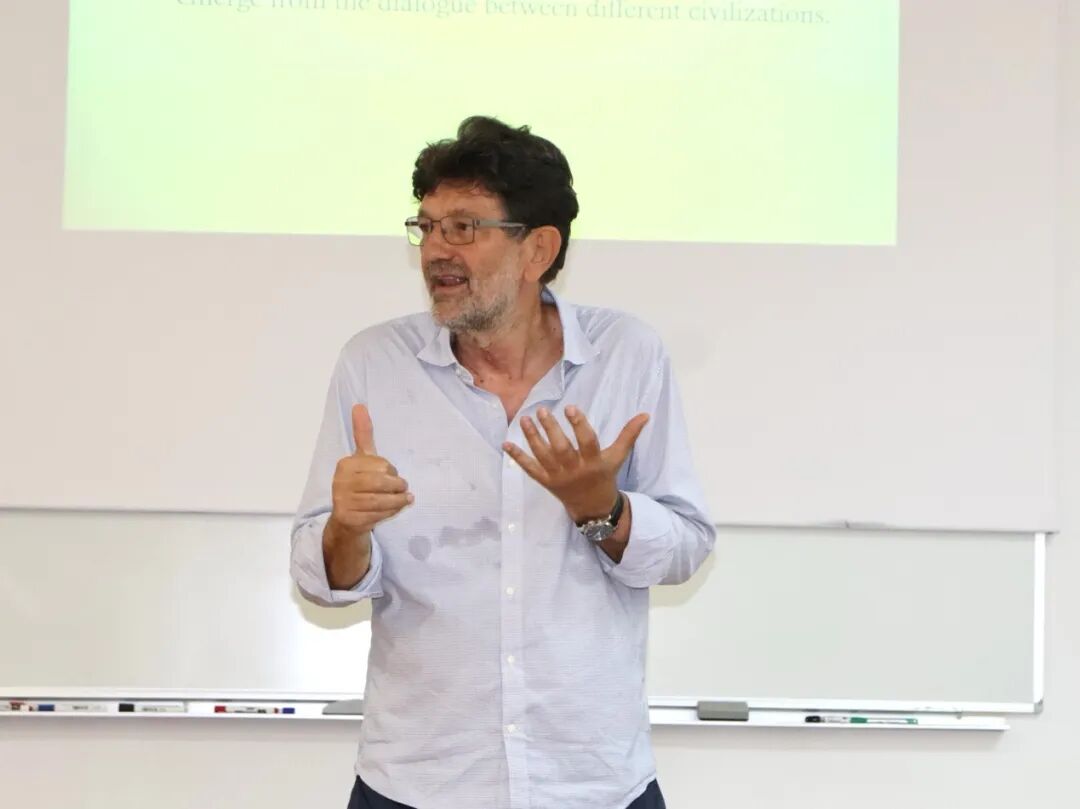
Jure Zovko
He Teng's report at Fudan University, “Rethinking Augustine's Theory of Just War,” focuses on Augustine's discourse on just war and interprets it within the broader framework of his theory of happiness. He points out that Augustine viewed war as a tragic consequence of human original sin, rather than inherently legitimate. War concerns unavoidable social conflicts in the human pursuit of a happy life. In his view, peace remains the ultimate ethical goal. Augustine's theory of just war combines moral and metaphysical criteria, emphasizing that warfare gains legitimacy only when undertaken to prevent greater evil and with just intentions. Its ultimate aim lies in establishing an ethical vision grounded in eternal peace.
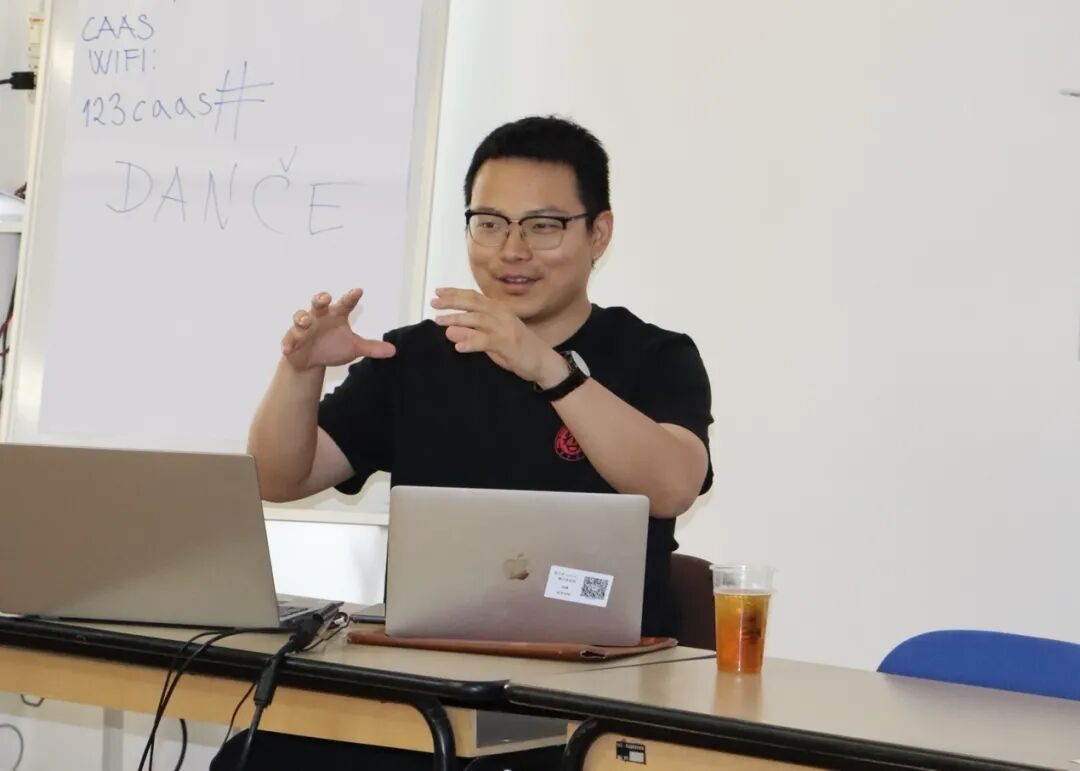
He Teng
Jianghan University's Ma Lan presented her report “Ethical Governance of BCI from the Perspective of National Security,” which examined brain-computer interfaces (BCI) as a disruptive dual-use technology. While offering societal benefits, BCI poses unprecedented ethical challenges to national security, personal dignity, and international relations due to its capacity to directly intervene in human cognition and thought processes. She first highlights the potential risks of BCI misuse in national security contexts, which not only challenge international humanitarian law but also directly threaten human autonomy and fundamental dignity. She then analyzes three core dilemmas in BCI ethical governance: the conflicting objectives between rapid military deployment and cautious scientific validation; the lag and gaps in existing laws and regulations addressing related issues; and geopolitical competition hindering the establishment of unified global ethical norms, thereby exacerbating the risk of a “race to the bottom.” To address these challenges, Malan proposes a governance framework grounded in “Responsible Research and Innovation”: governments and public administrators should play an active role by strengthening ongoing communication with all stakeholders and establishing an open, transparent governance process; implementing flexible regulation to prevent stifling technological innovation; and enhancing international cooperation while restricting military applications.
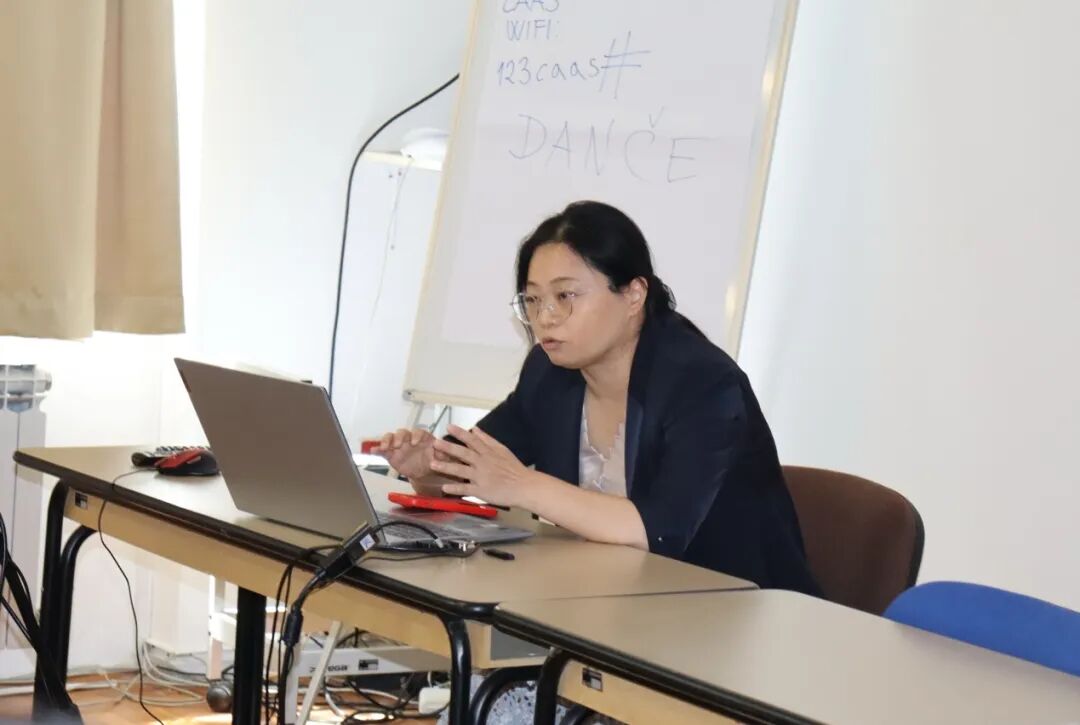
Malan
Ivančica Slunjski of the University of Zadar, Croatia, explored the deep roots of evil and violence in her report titled “Invisible and Unconscious Forces Shaping Society: Philosophical and Psychological Perspectives on the Sources of Evil and Violence.” She contends that the most destructive violence does not stem from overt personal malice or rational calculation, but rather from “unconscious” forces and ideological structures deeply embedded within individuals and society—forces that typically remain unnoticed. Slunjski draws on Jungian psychology to demonstrate that when individuals or societies refuse to acknowledge their own shadow aspects—such as aggression or greed—and project these onto specific external groups (like races, classes, or nations), it generates dehumanized enemies and extreme collective violence. She then shifts to Žižek's perspective, analyzing how ideology constitutes a more concealed form of “structural violence.” Žižek contends that the greatest violence lies not in visible “subjective violence” like terrorist attacks, but in “objective violence” and “symbolic violence” normalized by economic and political systems to the point where we no longer recognize them as violent. Faced with this invisible violence, Jung's solution is introverted and psychological, emphasizing the courageous confrontation and integration of personal and collective ‘shadows’ through the process of “individuation”; Žižek's approach, however, is outward-looking and political, calling for a thorough critique of ideology to achieve “political awakening.” True transformation does not begin by seeking external enemies, but rather from profound self-examination—the courage to question the truths we refuse to face, hidden within ourselves and the social structure.
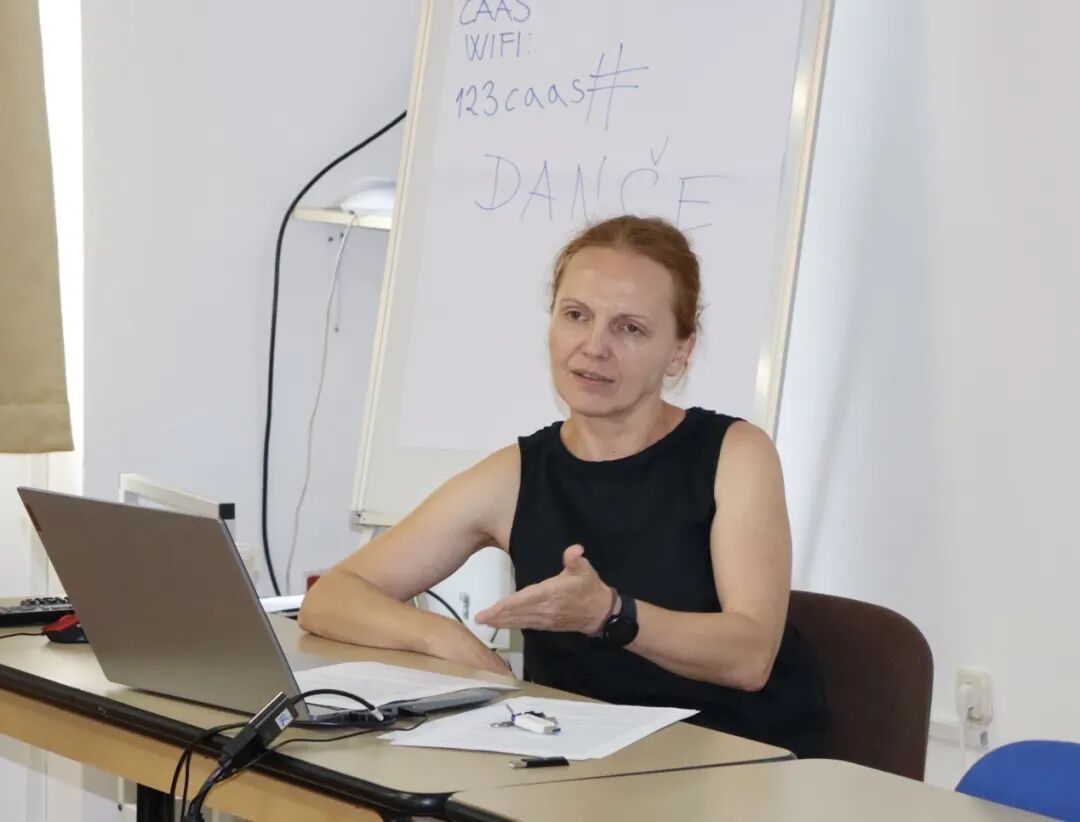
Ivančica Slunjski
Thomas Rusche from the University of Siegen, Germany, presented a report titled “Violence in the Digital Age: Discourse-Ethical Analysis and Recommendations for Action.” Grounded in Apel and Habermas's discourse ethics, the report systematically analyzed how digitalization fosters new forms of violence from the individual to the national level, proposing an ethical framework and actionable recommendations to address this challenge. He highlighted that communicative ethics encompasses two core principles: the “principle of moral universalization” and the “principle of teleological guidance.” Digital violence—such as algorithmic discrimination, disinformation, and state-sponsored cyberattacks—systematically violates the very essence of communicative ethics: “human dignity” and “responsibility for the future.” Professor Rusche proposes concrete countermeasures: First, develop a “Practical Handbook for Dialogue Ethics” targeting individuals, businesses, and governments to enhance digital literacy and corporate responsibility. Second, adopt a mature “tit-for-tat” strategy in digital governance—responding to cooperation with cooperation, and to power abuses with resolute, reciprocal, and limited countermeasures. Finally, for the AI era, vigorously promote algorithmic transparency, community-participatory development, and strengthened international cooperation. We must harness the powerful framework of dialogic ethics through open dialogue, critical reflection, and decisive action to ensure technological advancement serves human dignity and social justice—not becoming tools of oppression and division.
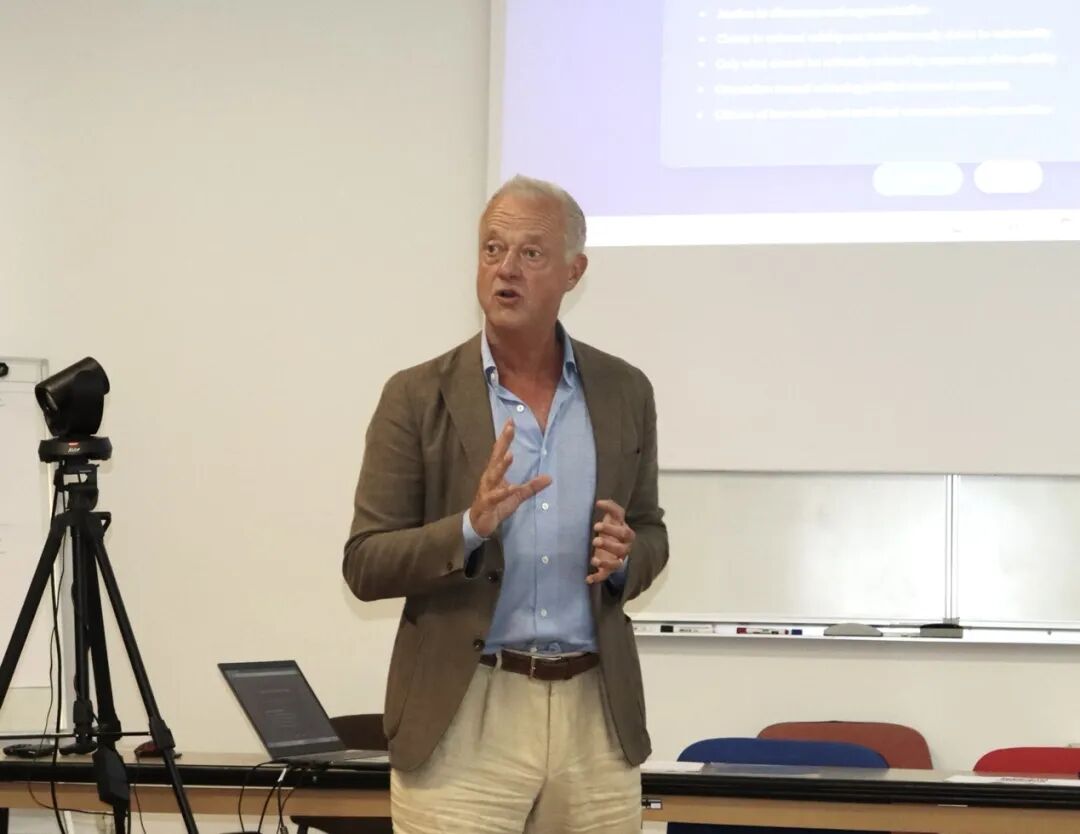
Thomas Rusche
Luo Yaling's Report from Fudan University: "How Discourse Ethics Renew Vitality in the Eternal Dialectic Between Violence and Civilization — Challenges and Inspiration from Jonathan Haidt's Moral Social Psychology" explored how dialogue ethics, grounded in Habermas and Apel's communicative theory, confronts the formidable challenges posed by contemporary social psychology and technological advancement. She first systematically elaborates Haidt's core findings: the emotion-driven mechanism of moral judgment; the incommensurability of moral matrices; and the psychological, social, and technological causes of frequent violence. Luo Yaling argues that while Haidt's theory reveals a lack of willingness for dialogue and the difficulty of reaching consensus, she contends—based on the distinction between facts and norms and the malleability of emotions—that these do not constitute fatal challenges to dialogic ethics. She advocates confronting these challenges head-on to gain insights for profound self-development and adaptation: First, dialogue ethics must reemphasize its substantive core norms—such as the equal rights and dignity of all participants—and leverage dialogic reason as a corrective for human frailties. Integrating Haidt's insights, dialogue ethics must navigate the relationship between universal norms and pluralistic values. Second, it must highlight consensus as a guiding principle, acknowledging the complexity of real-world interactions and recognizing that dialogue's purpose lies in mutual learning and clarifying differences rather than achieving final agreement. Simultaneously, given Haidt's findings, concrete dialogues must be grounded in empathy. Third, it must manifest its “ethics of responsibility” dimension, particularly addressing new challenges in the AI era, and advocate for corresponding empirical and normative research. The contemporary mission of dialogic ethics is to courageously confront the complexity of human nature and the challenges of reality, drawing insights from empirical research to advance its own development. In doing so, it continuously channels the power of reason into the eternal struggle between violence and civilization.
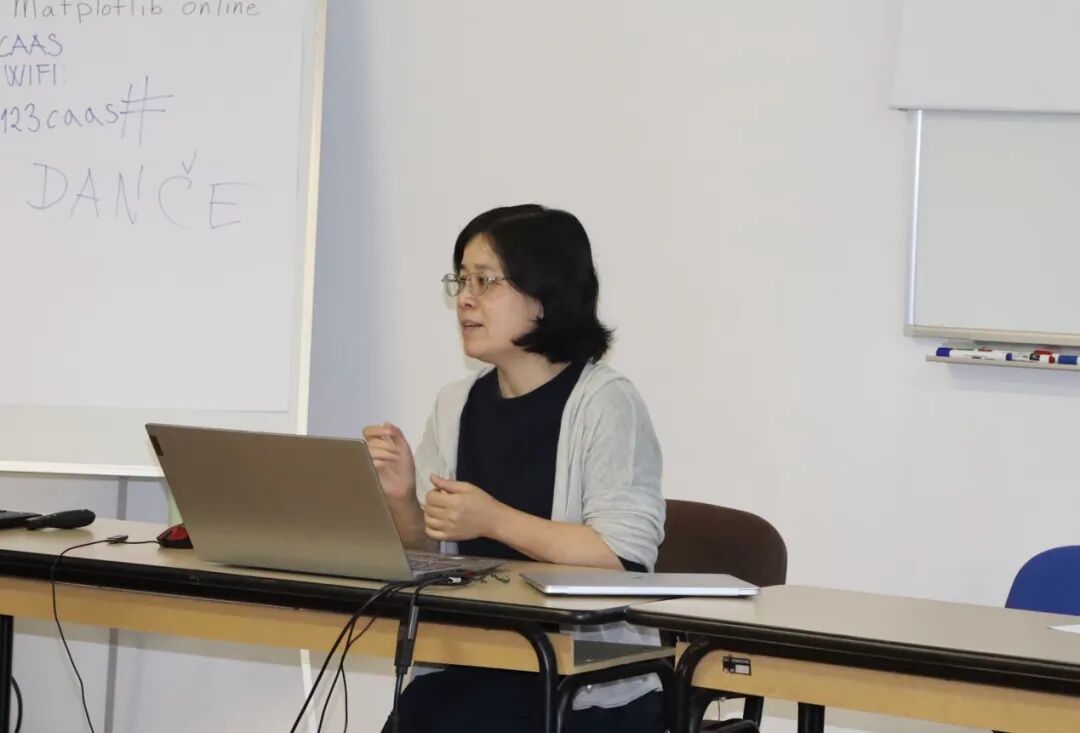
Luo Yaling
Xia Shiming's report at Fudan University, “Hegel's Legacy in Understanding Structural Violence in Civil Society,” revisits Hegel's political philosophy. By revisiting his profound analysis of “civil society,” it seeks to provide crucial theoretical resources for understanding contemporary “structural violence.” She first elucidated how Hegel exposed the inherent contradictions within civil society. In Hegel's theory, the inevitable wealth inequality arising from absolute contingency constitutes a harm inherent to civil society's structure itself. This harm extends beyond material deprivation to encompass a comprehensive assault on human dignity. Hegel's understanding of civil society's problems aligns remarkably with what we today term “structural violence.” By examining Hegel's proposed solution—integrating civil society and the state into a unified “ethical community” through “mediating associations”—we directly recognize that a key root of structural violence in civil society lies in the failure of this integration: the profound division between civil society and the state. Finally, Xia Shiming concludes that although we live in an era far removed from Hegel's time, his ideas still provide important reference points for our contemporary reflections on structural violence.
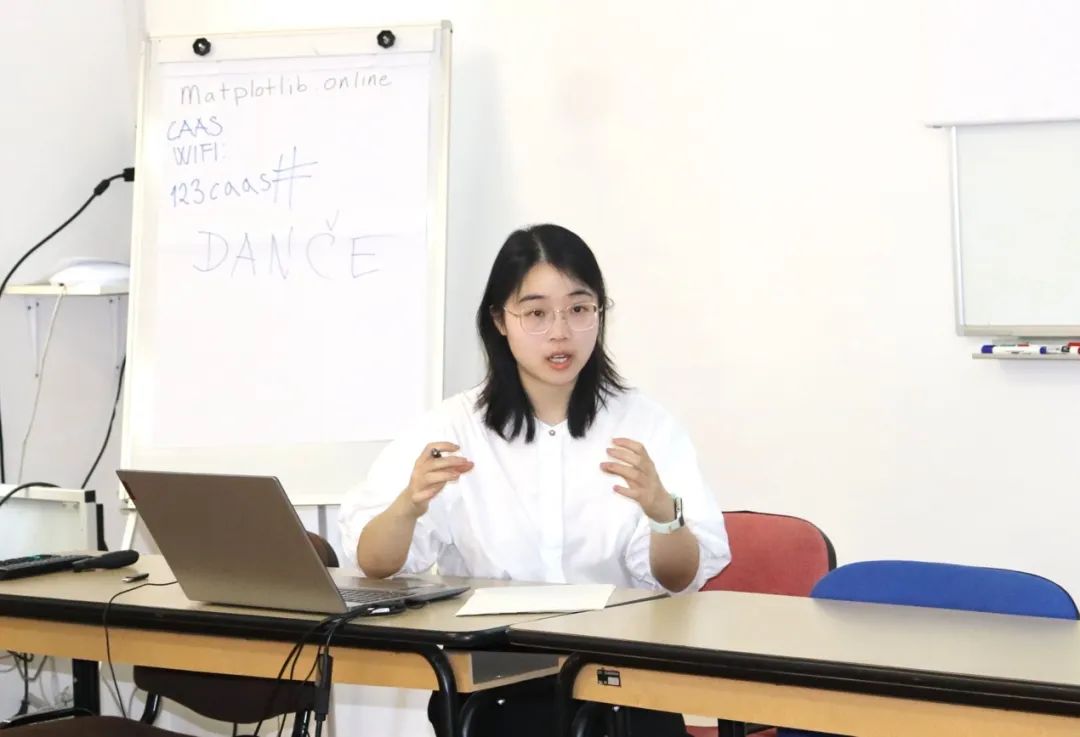
Xia Shiming
Finally, Željka Lilek from the University of Zadar, Croatia, presented her paper “Beauty and Goodness as Segments of Kant's Philosophy,” exploring the intrinsic connection between ‘beauty’ and “goodness” in Kantian philosophy. Its central argument posits that beauty serves as a symbol of moral goodness. This connection is not a direct equivalence but is grounded in the structural commonality between aesthetic and moral judgments. The judgment of beauty is a “reflective judgment” that does not rely on pre-existing concepts but arises from the “free play of imagination and understanding,” thereby generating a subjectively “disinterested pleasure.” Although this pleasure is subjective, it claims universal validity based on transcendental cognitive faculties. Thus, aesthetic experience serves as a bridge transitioning from the sensuous to the moral. Through the appreciation of beauty, particularly natural beauty, we cultivate and elevate our moral sensibilities. Lilek concludes that “the cultivation of taste” is fundamentally an aesthetic education. By training us to make disinterested, universal judgments, it prepares us to embrace and practice moral principles, thereby contributing to the construction of a more perfect moral society.
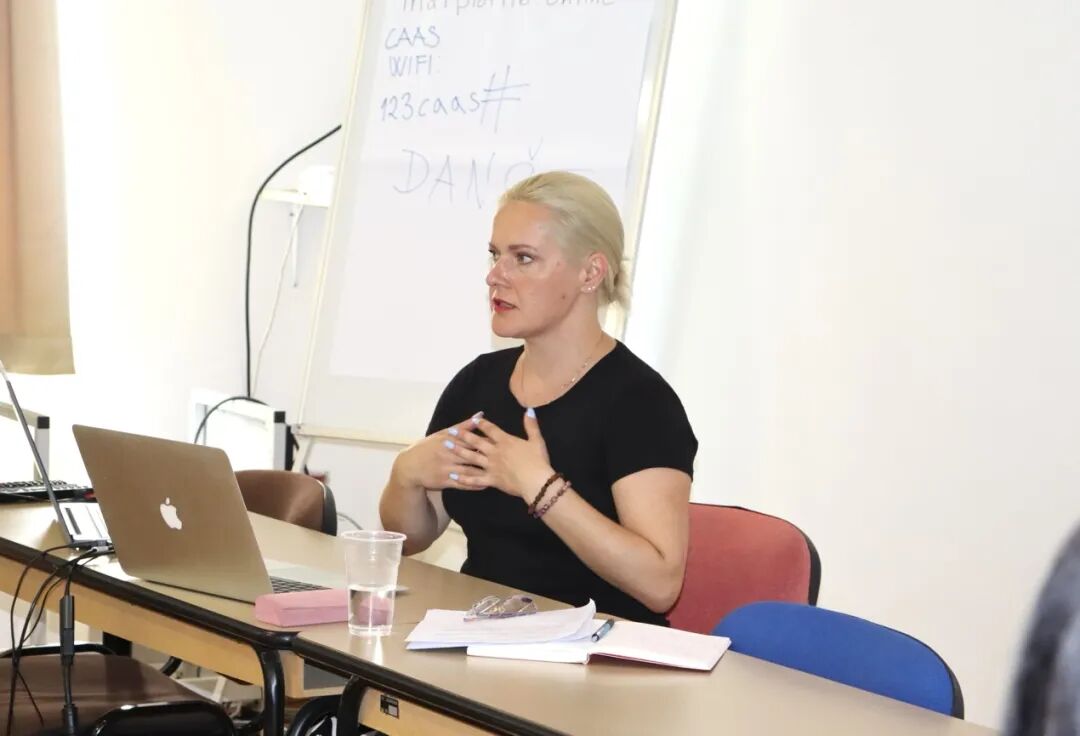
Željka Lilek
During the conference, representatives from Fudan University's Global Ethics Center conducted brief interviews with some international participants and introduced the center's philosophy: “Exploring real ethical dilemmas faced globally, seeking shared rational principles to resolve human conflicts, and advancing the ‘ethics of shared responsibility’ to foster a common future for humanity.” This philosophy aligns closely with IUC's longstanding commitment to promoting freedom, cross-cultural understanding, and global dialogue. Participants consistently praised the conference's organization and agenda during interviews, commending this interdisciplinary approach rooted in global ethical challenges. They expressed hope for greater participation from scholars across diverse nations and disciplines in future events, ensuring this international exchange platform remains sustainable and continuously expands.
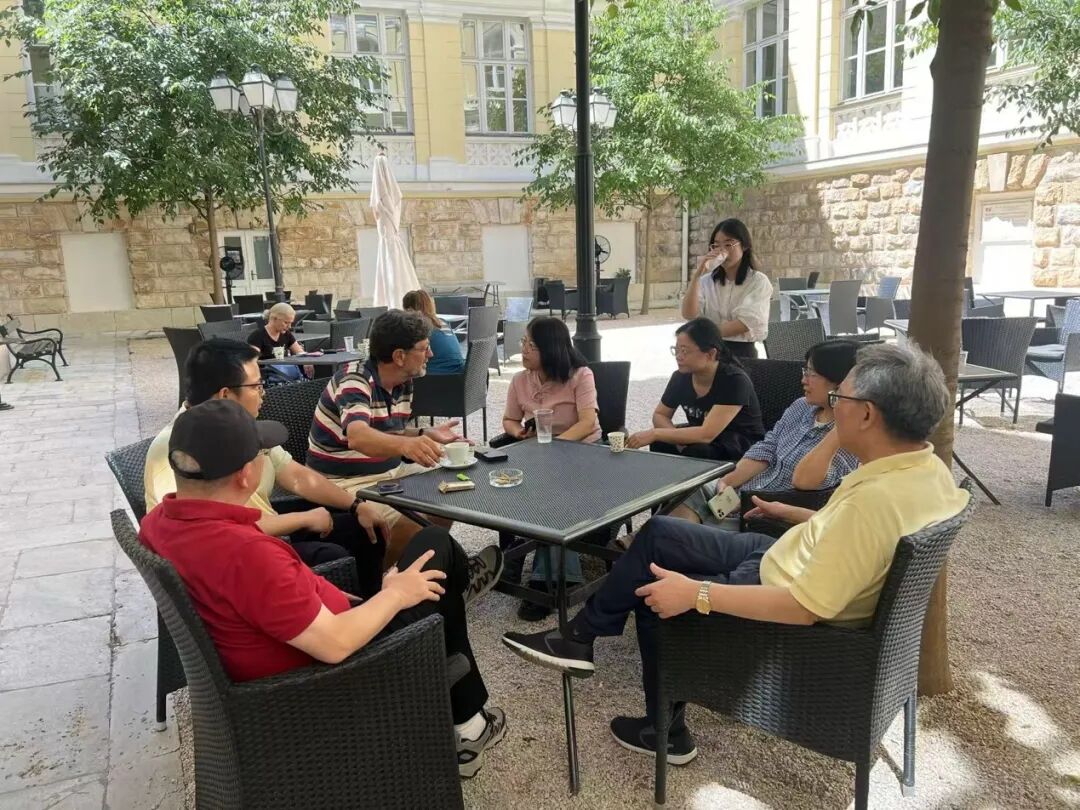
Following the presentations, attendees gathered in the IUC courtyard to reflect on the conference, highly commending the open, sincere, and interdisciplinary atmosphere it fostered. The event not only facilitated profound academic dialogue but also forged valuable friendships among peers. Exchanging ideas in Dubrovnik, a city whose motto is “Libertas” (Freedom), proved deeply inspiring and left participants with unforgettable memories.