Publication Information
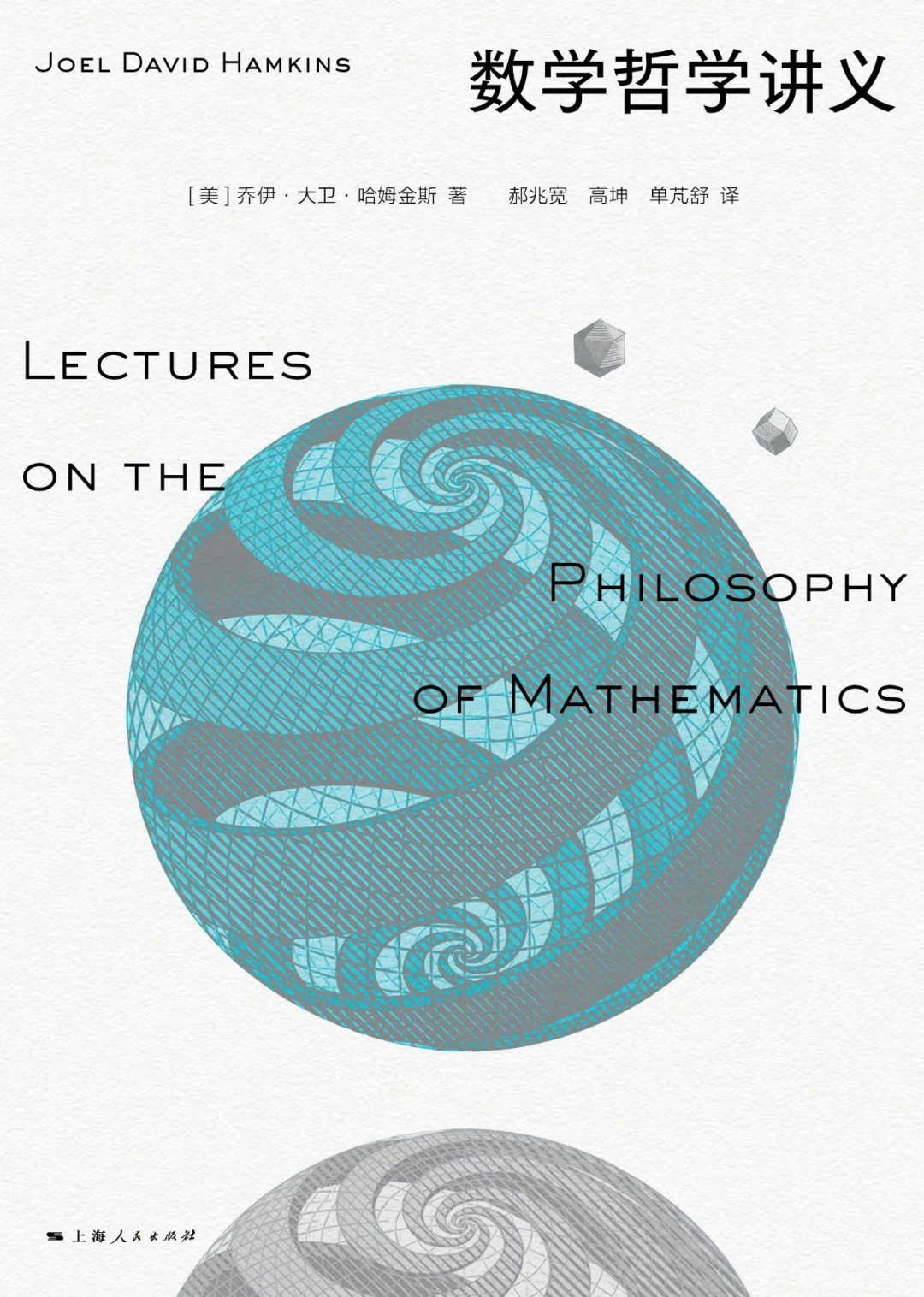
Title: Lectures on the Philosophy of Mathematics
Author: Joel David Hamkins
Publisher: Shanghai People's Publishing House
Publication Date: July 2025
ISBN: 978-7-208-19325-3
Author Biography
Joel David Hamkins
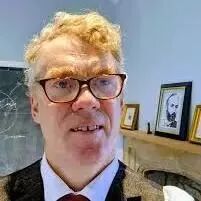
Professor of Philosophy at the University of Notre Dame, USA; former Professor of Logic in the Department of Philosophy at the University of Oxford; Distinguished Professor of Mathematics, Philosophy, and Computer Science at the City University of New York. Hamkins is a renowned scholar in set theory and the philosophy of mathematics, specializing in mathematical logic and philosophical logic. His research focuses on the mathematics and philosophy of infinity, particularly set theory, the philosophy of set theory, and the mathematics and philosophy of potentialism. He is also a highly ranked and active user on the professional mathematics Q&A site MathOverflow.\
Translator's Profile

Hao Zhaokuan
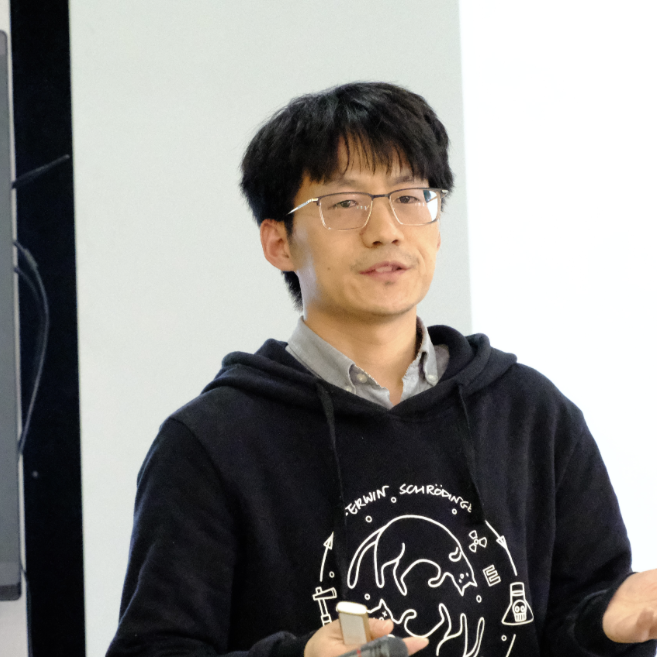
Professor and Doctoral Supervisor at the School of Philosophy, Fudan University. His primary research interests include mathematical logic, philosophy of mathematics, and the thought of Gödel.
Gao Kun
Ph.D. in Philosophy from Peking University, currently teaching at the Center for Philosophy of Science and Technology at Shanxi University, where he primarily engages in research on the philosophy of logic and mathematics.
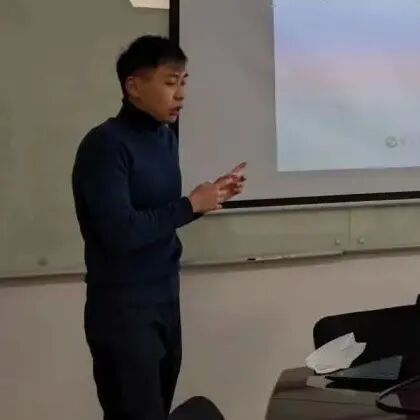
Shan Pengshu
Ph.D. in Logic, Fudan University.
Author's Preface
A Philosophy of Mathematics That Understands Mathematicians
Philosophical puzzles permeate mathematics, from fundamental questions of mathematical ontology—What are numbers? What is infinity?—to inquiries into the relationship between truth, proof, and meaning. What role do figures play in geometric arguments? Do mathematical objects exist that we cannot construct? Can every mathematical problem in principle be solved computationally? Does every truth in mathematics have a reason? Can every mathematical truth be proven?
This book serves as an introduction to the philosophy of mathematics, where we will consider all these questions and more. Coming to this discipline from mathematics itself, I strive in this work to explore a new approach to understanding mathematical philosophy—one grounded in mathematics and motivated by mathematical inquiry or practice. I endeavor to treat philosophical questions as those that arise naturally within mathematics. Consequently, I organize this book according to mathematical themes such as numbers, infinity, geometry, and computability, incorporating some mathematical arguments and elementary proofs where they help clarify the relevant philosophical issues.
Platonism, realism, logicism, structuralism, formalism, intuitionism, type theory, and other philosophical positions naturally emerge in diverse mathematical contexts. For instance, from the Pythagorean school's ancient concepts of incommensurability and the irrationality of √2, to Joseph Liouville's construction of transcendental numbers, to the discovery of non-constructible numbers in geometry, such mathematical progress affords us opportunities to contrast Platonism with structuralism and other differing accounts of what numbers and mathematical objects are. Structuralism originates from Dedekind's Arithmetic Categorical Theorem and draws strength from categorical interpretations of the real numbers and other familiar mathematical structures. The heightened rigor of calculus provides a natural setting for discussing whether mathematics' indispensability in science furnishes grounds for mathematical truth. Zeno's paradoxes on motion and Galileo's paradoxes on infinity led to the Cantor-Hume principle, which in turn prompted Frege's concept of numbers and Cantor's work on hyperinfinity. Thus, mathematical themes spanning millennia repeatedly provoke philosophical reflection.
Therefore, my aim is to present a mathematics-oriented philosophy of mathematics. Years ago, Penelope Maddy (1991) criticized certain segments of contemporary philosophy of mathematics as nothing more than an internal quarrel among metaphysicians, where the very focus of the dispute—if any—remained unclear. (p.158)
She sought to refocus mathematical philosophy on questions closer to the heart of mathematics:
I recommend a hands-on philosophy of mathematics, one grounded in real practice, one that understands mathematicians' own problems, procedures, and concerns. (p.159)
I find this inspiring, and one of my goals in this book is to follow this advice—to present an introduction to the philosophy of mathematics that feels relevant to both mathematicians and philosophers. Whether or not you agree with Maddy's harsh critique, there are indeed many compelling problems in the philosophy of mathematics that I hope to share with you in this book. I hope you will enjoy them.
Another goal of mine in this book is to help readers enhance their mathematical literacy on certain topics crucial to the philosophy of mathematics, such as the foundations of number theory, non-Euclidean geometry, non-standard analysis, Gödel's incompleteness theorems, and uncountability. Readers naturally approach this subject from diverse mathematical backgrounds, ranging from beginners to experts. Therefore, I strive to provide content useful to everyone, always progressing from the basic to the advanced. For instance, the Hilbert Hotel parable serves as an accessible introduction to Cantor's results on countable and uncountable infinities, a discussion that ultimately leads to the topic of large cardinals. While I set ambitious goals for several mathematical subjects, I strive to address them in an approachable manner, avoiding getting bogged down in intricate details.
The content of this book originated from lecture notes for my 2018, 2019, and 2020 series on the philosophy of mathematics during Michaelmas Term at the University of Oxford. I am grateful to my friends in the Oxford philosophy of mathematics circle for their extensive discussions, which helped refine this work. Special thanks to Daniel Isaacson, Alex Paseau, Beau Mount, Timothy Williamson, Volker Halbach, and especially Robin Solberg for his detailed comments on early drafts. I also thank Justin Clarke-Doane at Columbia University in New York for his suggestions, and Theresa Carcaldi for her substantial editorial assistance.
This book was typeset using LATEX. Except for the image on page 141, which is in the public domain, I created all other figures in the book using TikZ within LATEX. They were created specifically for this book, though several also appear in my other book, Proof and the Art of Mathematics (Hamkins, 2020), published by the MIT Press.
Afterword
When Editor Ren Jianmin from Shanghai People's Publishing House approached me about translating this book, I hesitated at first. For one thing, I had several unfinished projects on my plate. For another, I knew full well that translation is arduous work—once undertaken, meeting deadlines would likely prove challenging. However, as a young editor, Ren Jianmin's passion for the specialized field of philosophy of mathematics touched me deeply, and I ultimately agreed to take on the task. As a condition, I requested to collaborate with one or two young scholars. Immediately, I thought of Dr. Shan Pengshu and Dr. Gao Kun. To my great honor, they enthusiastically agreed. Both Shan and Gao were once my students. They share a deep passion for logic, exceptional intelligence, and, most importantly, excellent command of English. Gao Kun had just completed the translation of Wang Hao's monumental work From Mathematics to Philosophy—a highly challenging task he executed with remarkable skill. Shan Pengshu had collaborated with me on translating a small book during his studies; besides his strong English, he also possesses exceptional Chinese writing abilities.
We divided the work as follows: Shan Pengshu would translate Chapters 1-3, Gao Kun would handle Chapters 4-6, and I would translate the Preface and Chapters 7-8. I had also agreed to oversee the final proofreading of the entire book, but ultimately Gao Kun and I completed this task together. Shan Pengshu then took charge of the manuscript's LaTeX typesetting, along with compiling the bibliography and index—an extremely tedious and time-consuming task. He approached it with meticulous care and genuine enthusiasm. In short, thanks to the proactive efforts of these two young scholars, the entire translation process proceeded more smoothly than I had anticipated. This, in a way, confirms that my understanding of their capabilities was accurate.
The author of this book, Hamkins, is currently a professor at the University of Notre Dame in the United States. He has made significant contributions in the field of set theory and has increasingly focused on the philosophy of mathematics in recent years, emerging as a highly active philosopher of mathematics. Hamkins was a student of Wu Ding, a renowned set theorist and professor at Harvard University. Both teacher and student have visited Fudan University. However, their philosophical positions are markedly different, even opposing. Simply put, Hamkins is a so-called “multiversalist,” a philosophical stance he essentially pioneered and championed. Wu Ding, conversely, is a staunch “monist.” His paper “The Continuum Hypothesis, the De-particularization of Sets, and the Omega Conjecture” offers a powerful rebuttal to multiversalism. Their research methodologies also diverge significantly. Wu Ding remains largely unaffected by contemporary philosophy, instead deriving potential philosophical questions directly from mathematical foundations—particularly set theory—which are also intrinsically linked to his ultimate research project on L. Hamkins, by contrast, clearly focuses more on mathematical philosophy theories within an analytic philosophy framework, a tendency evident throughout his book.
Compared to traditional philosophy of mathematics textbooks or monographs—such as Shapiro's Philosophy of Mathematics, which I co-translated with my fellow scholar Associate Professor Yang Ruizhi—Hamkins' book stands out for its thematic focus on major achievements in mathematical logic, particularly classical first-order logic and set theory. It offers accessible interpretations of these results and uses them as a foundation for exploring related philosophical questions. Shapiro's work, however, centers on the history of philosophy, only occasionally referencing elementary specialized results from mathematical logic when necessary. Both approaches have their merits. The former style closely integrates the philosophy of mathematics with mathematical practice, making it substantive and evocative of the era when modern mathematical philosophy was founded—a time when great mathematicians like Frege, Hilbert, Poincaré, and Brouwer primarily engaged in philosophical discussions about mathematics. The latter approach aligns more closely with traditional philosophical research paradigms, enabling mathematical philosophy to integrate seamlessly with established branches of philosophy such as metaphysics and logic. These two types of works impose different demands on readers and authors. The former requires familiarity with the great achievements of modern mathematical logic—precisely Hamkins's area of expertise—while the latter demands a deep understanding and grasp of the history of philosophy. Of course, it would be ideal to combine both approaches—to discuss philosophical logic and metaphysics grounded in the practice of mathematical foundations and mathematical logic. However, this places even greater demands on both readers and authors, potentially requiring a shift in philosophical perspective.Specifically, mathematical logic—including set theory, model theory, and recursion theory—should no longer be viewed as alien to philosophy but rather as its natural extension. Logic should no longer be treated as a purely formal deductive system, as in analytic philosophy, but rather as a rigorous formal theory of concepts. Only then might we approach Plato's original conception of philosophy, where philosophical inquiry ultimately concerns the objective world of concepts, with mathematical concepts representing the realm closest to rigorous understanding. Philosophical comprehension of mathematical concepts would ultimately inspire us to construct a theory of general concepts—precisely what logic and metaphysics strive to achieve.
We have strived to remain faithful to the original text to the best of our ability. The translation has been revised based on the errata from the second printing of the source book, with translator's notes added only in very rare instances. Naturally, given our own limitations and capabilities, errors and omissions are inevitable, and we welcome readers' corrections. During the translation process, Dr. Zhao Xiaoyu provided invaluable assistance with LaTeX typesetting, for which we express our gratitude!
Hao Zhaokuan
May 18, 2025
Table of Contents
Preface ix
About the Author xiii
Chapter 1 Numbers 1
Section 1 Numbers and Digits 1
Section 2 Number Systems 3
Section 3 Incommensurable Numbers 5
Section 4 Platonism 8
Section 5 Logicism 11
Section 6 Interpreting Arithmetic 19
Section 7 What Numbers Cannot Be 30
Section 8: Dedekind Arithmetic 34
Section 9: Mathematical Induction 37
Section 10: Structuralism 42
Section 11: What Are Real Numbers? 56
Section 12: Transcendental Numbers 65
Section 13: Complex Numbers 67
Section 14: Contemporary Type Theory 73
Section 15: Other Number Classes 75
Section 16: What Is the Significance of Philosophy? 75
Section 17: Ultimately, What Exactly Are Numbers? 76
Thinking Questions 77
Further Reading 80
Acknowledgments and Sources 81
Chapter 2: Rigour 83
Section 1: Continuity 83
Section 2: Instantaneous Change 89
Section 3: Expansion of Conceptual Vocabulary 92
Section 4: The Least Upper Bound Principle 95
Section 5: The Indispensability of Mathematics 100
Section 6: Abstraction in the Concept of Functions 105
Section 7: Revisiting Infinitesimals 113
Thinking Questions 125
Further Reading 128
Acknowledgments and Sources 129
Chapter 3: Infinity 131
Section 1: Hilbert's Hotel 131
Section 2: Countable Sets 134
Section 3: Equinumerosity 137
Section 4: Hilbert's Half-Marathon 140
Section 5: Incountability 141
Section 6: Cantor on Transcendental Numbers 146
Section 7: On the Quantity of Subsets of Sets 149
Section 8: Transcendental Equinumerosity: The Principle of Size Comparison 158
Section 9: What Is Cantor's Continuum Hypothesis? 163
Section 10: Transfinite Cardinalities—The “Aleph” Sequence and the “Beth” Sequence 165
Section 11: Zeno's Paradox 169
Section 12: How to Count 171
Thinking Questions 174
Further Reading 178
Acknowledgments and Sources 179
Chapter 4 Geometry 181
Section 1 Geometric Constructions 182
Section 2 Irrational Numbers 190
Section 3 Alternative Toolkits 194
Section 4 The Ontology of Geometry 199
Section 5 The Role of Diagrams and Figures 200
Section 6 Non-Euclidean Geometry 212
Section 7 Euclid's Mistake? 220
Section 8: Geometry and Physical Space 223
Section 9: Poincaré on the Nature of Geometry 225
Section 10: Tarski on the Decidability of Geometry 226
Questions for Reflection 228
Further Reading 230
Acknowledgments and Sources 231
Chapter 5: Proofs 233
Section 1: Syntax-Semantics Dichotomy 234
Section 2: What Is a Proof? 236
Section 3: Formal Proofs and Proof Theory 252
Section 4: Automated Theorem Proving and Proof Verification 264
Section 5: Completeness Theorems 268
Section 6: Non-Classical Logics 272
Section 7: Conclusions 281
Thinking Questions 281
Further Reading 284
Acknowledgments and Sources 285
Chapter 6 Computability 287
Section 1 Primitive Recursion 288
Section 2 Turing Computability 297
Section 3 Computational Power: Layer Spectrum and Threshold Perspectives 308
Section 4 The Church-Turing Thesis 310
Section 5 Undecidability 312
Section 6 Computable Numbers 315
Section 7 Computation with Information Sources and Turingness 318
Section 8 Computational Complexity Theory 320
Questions for Reflection 329
Further Reading 333
Chapter 7 Incompleteness 335
Section 1 Hilbert's Program 337
Section 2 The First Incompleteness Theorem 341
Section 3 The Second Incompleteness Theorem 353
Section 4: Gödel-Roth Incompleteness Theorem 357
Section 5: Tarski's Undefinability of Truth Theorem 359
Section 6: Fefferman Theory 360
Section 7: Ubiquitous Independence 361
Section 8: Anti-Mathematics 363
Section 9: Goedelstein Theorem 367
Section 10. Lebesgue's Theorem 371
Section 11. Two Types of Undecidability 373
Thought Questions 374
Further Reading 377
Chapter 8. Set Theory 379
Section 1. Cantor-Bendixson Theorem 380
Section 2. Set Theory as a Foundation for Mathematics 383
Section 3. The Principle of Universal Generalization 388
Section 4: The Genealogy of Sheaves 393
Section 5: Separation Axioms 396
Section 6: Extensionality 400
Section 7: Replacement Axiom 402
Section 8: Axiom of Choice and Well-Ordering Theorem 406
Section 9: Large Cardinal Numbers 412
Section 10: Continuum Hypothesis 422
Section 11: Monism 424
Section 12: Criteria for New Axioms 427
Section 13: Does Mathematics Need New Axioms? 432
Section 14: Pluralistic Cosmology 437
Thinking Questions 443
Further Reading 446
Acknowledgments and Sources 447
References 449
Glossary 461
Subject Index 463
Translator's Afterword 487