On August 16, 2025, the Symposium on New Developments in the Study of School of Mind of the Song Dynasty and Professor He Jun’s new work The Original Mind and Practical Learning was successfully held in Guanghua Tower at Fudan University, co-organized by the School of Philosophy Fudan University and the Shanghai Academy of Confucianism(上海儒学院). The symposium focused on Professor He Jun’s recent research on Lu Xiangshan’s Theory of Mind, with thirty scholars from universities and research institutions across China in attendance. Participants held in-depth discussions on major issues such as the historical positioning of Lu Xiangshan’s School of Mind, the Debate between the theory of Zhu Xi and that of Lu Jiuyuan(朱陆之辩), and the intellectual lineage of Mencius thought(孟子学渊源), offering valuable insights for the further studies on the study of the School of Mind of the Song Dynasty.
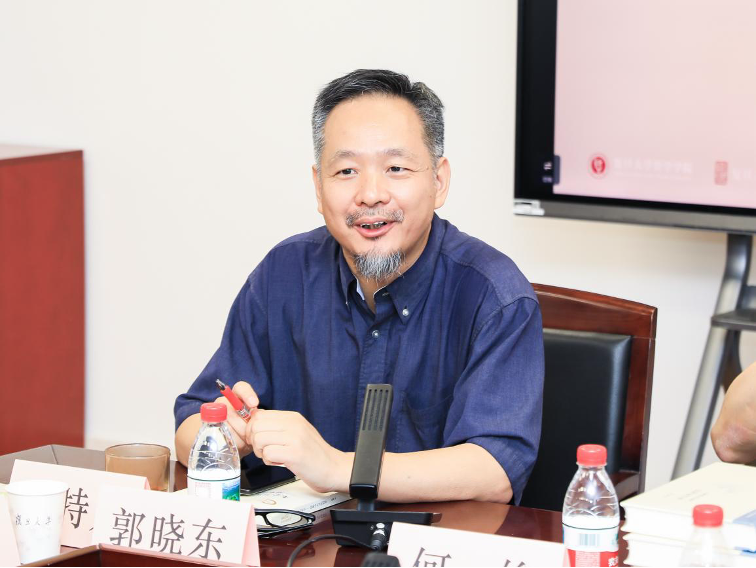
The meeting was chaired by Professor Guo Xiaodong of Fudan University.
Professor Guo remarked that current studies on the School of Mind concentrate largely on Wang Yangming’s theory, while monographs on Lu Xiangshan’s Theory of Mind(象山心学)remain scarce in mainland China, in spite of several related thematic essays on this topic. Professor He’s new book bridges this academic gap, significantly advancing research on the study of the School of Mind and Neo-Confucianism of the Song and Ming Dynasties(宋明理学). As is pointed out in his speech, since the book’s publication, The Original Mind and Practical Learning has drawn wide attention and high praise, with prior symposia held by Nanchang University and East China Normal University. This meeting was thus convenedto further deepen the study of Lu Xiangshan’s Theory of Mind, to consolidate scholarly consensus on Neo-Confucianism of the Song Dynasty, and to continuously promote new developments in this field. After, Professor He Jun delivered the keynote address.
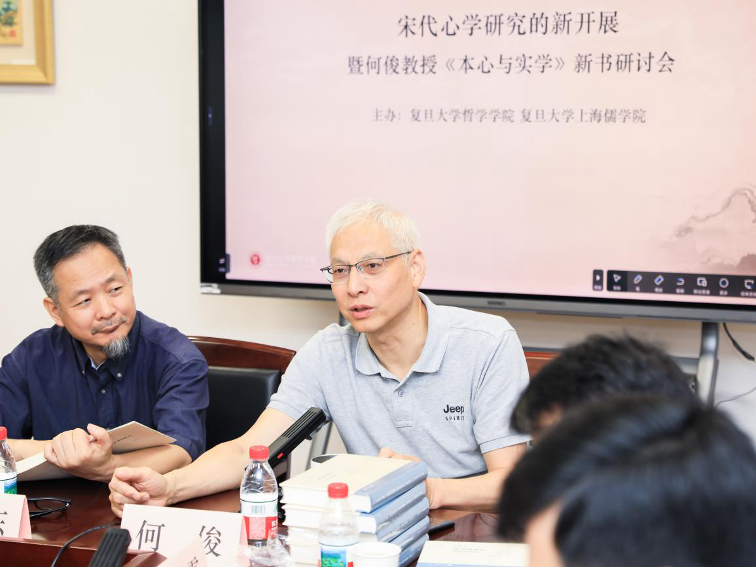
Professor He Jun began with a reflection on the genesis of the book, explaining that it originated from a 2019 research project at the Shanghai Academy of Confucianism at the invitation of Professor Chen Lai, and he expressed gratitude to Professor Yang Guorong for his support. He emphasized that the book diverges from traditional intellectual-historical approaches, grounding itself instead in Mencius’s principle of “knowing the person and the age.” (知人论世)The project situates Lu Xiangshan’s theory within his concrete historical context and explores how “embodied thinking” could be possible.
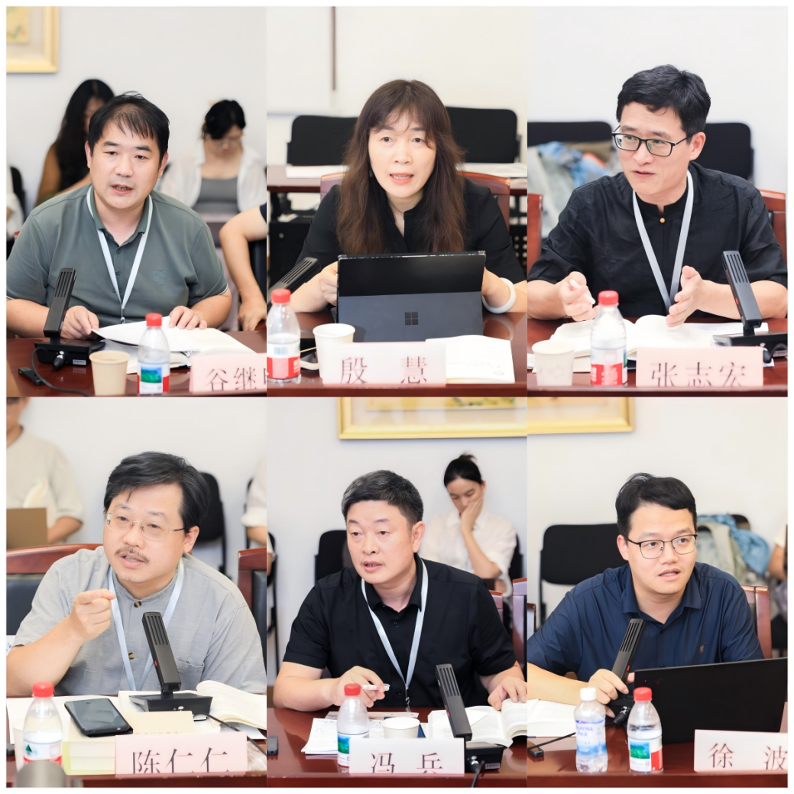
The symposium featured five plenary sessions with a compact agenda. The sessions were chaired respectively by Professor Gu Jiming from Tongji University, Professor Yin Hui from Yuelu Academy of Hunan University, Researcher Zhang Zhihong from the Shanghai Academy of Social Sciences, Professor Chen Renren from Hunan University, and Professor Feng Bing from Xiamen University. The concluding session was moderated by Associate Professor Xu Bo from Fudan University.
First Panel
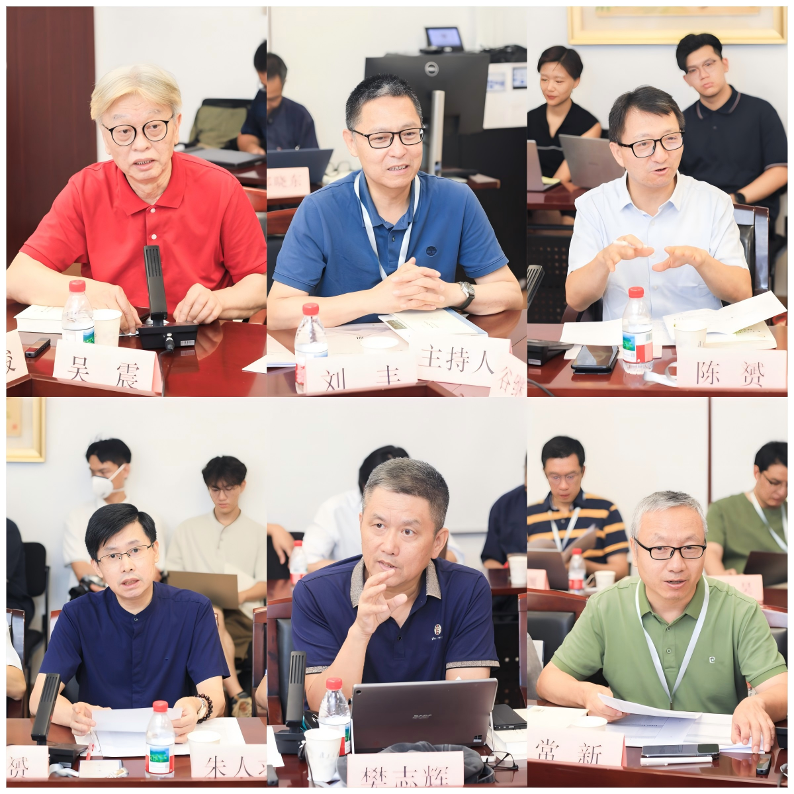
The first panel was opened by Professor Wu Zhen of Fudan University, who noted that The Original Mind and Practical Learning continues the historiographical rigor and attention to context exemplified by Yu Yingshi. The book captures the historical significance of Lu Xiangshan’s philosophy, highlighting the Original Mind as a supreme metaphysical category while uncovering the often-neglected dimension of Practical Learning, which distinguishes Song Dynasty thought from theNeo-Confucianism of the Song and Ming Dynasties. This dual focus represents a significant step forward in the Study of the School of Mind.
Researcher Liu Feng of the Chinese Academy of Social Sciences emphasized He’s methodological self-consciousness of “polishing the ancient mirror by ancient methods”(古镜重磨要古方), placing individual thought within the structural transformations of the Southern Song. This approach transcends traditional conceptual history and incorporates methods from modern intellectual history. This work not only fills the long-standing gap in scholarship on Lu Xiangshan, but also brings a paradigmatic innovation to the methodological transformation of Chinese philosophy, for the first time systematically constructing a threefold framework encompassing Lu’s philosophical world, world of thought, and historical world.
Professor Chen Yun of East China Normal University noted that the Original Mind and Practical Learning makes two major scholarly contributions. First, it maintains a balance between the two major intellectual traditions of Neo-Confucianism(理学)and the Study of Confucian Classics(经学). By examining Lu Jiuyuan’s understanding of the Dao as it unfolds through concrete affairs and the Six Classics toward the Original Mind within the spatial-temporal dimensions (the cosmos), the work repositions his thought within the history of Neo-Confucianism of the Song and Ming Dynasties. Second, it transcends the conventional Zhu–Wang dichotomy by constructing a framework centered on the Original Mind (the body of the Dao) and Practical Learning (Cultivation(功夫)). Through a close analysis of the core philosophical problem of “my mind—the cosmos—things,” it reveals the internal logic of Lu Jiuyuan’s philosophy and highlights the universalist feature of Lu Xiangshan’s Theory of Mind—“the unity of mind and principle among sages across time.(古今圣贤同心同理)”
Professor Zhu Renqiu of Huazhong University of Science and Technology emphasized that Professor He reinterprets the historical significance of the Debate between the theory of Zhu Xi and that of Lu Jiuyuan. Although Lu Xiangshan’s “mind is principle” and Zhu Xi’s “nature is principle” differ ontologically, both ultimately converge on the pursuit of moral reality and practical realization. In doing so, the book transcends the traditional opposition between “concise cultivation(易简工夫)” and “fragmented enterprise(支离事业),” revealing their complementary relationship—like two indispensable wings of a bird. On this basis, Professor He originally proposes the theory of “intra-community competition within Neo-Confucianism,” arguing that Zhu and Lu, while debating, shared a profound commitment to safeguarding Confucian core values, and that their contestation was an internal dynamic driving vitality within the same intellectual community.
Professor Fan Zhihui of Shanghai Normal University observed that the contribution of the Original Mind and Practical Learning lies in its breakthrough beyond doctrinal exposition. It illuminates how Xiangshan bridges Practical Learning (Confucian praxis aimed at restoring moral order and social harmony) and the Original Mind, thereby opening a concise path of “justification by the Original Mind” from within the exegetical tradition of the Classics. The significance of this transformation, Fan argues, is comparable to the paradigm shifts initiated by Augustine and Luther in Christian theology, establishing Xiangshan as a “reformer of Neo-Confucianism” rather than merely a “reiterator of Mencius.”
Finally, Professor Chang Xin of Xi’an Jiaotong University pointed out that both Professor He and Yu Yingshi adopt a similar methodology of “seeing grand history through a small aperture,” integrating meticulous textual analysis with a broad philosophical narrative. The Original Mind and Practical Learning moves beyond the traditional metaphysical and ethical critique framework of the Confucian–Buddhist debate by developing a “utilitarian critique of Buddhism(功利论辟佛)”, criticizing Buddhist disengagement from state and social affairs through the lens of social reality. This shift not only responds to the pressing needs of the Southern Song’s weakened polity but also provides solid evidence to counter the charge by the Cheng–Zhu School that it was Chan Buddism. However, Chang adds that comparative studies remain indispensable. Examining the divergent anti-Buddhist strategies of different thinkers and their impact on later scholarship would further enrich our understanding of Lu Xiangshan’s distinctive commitment to Practical Learning.
The Second Panel
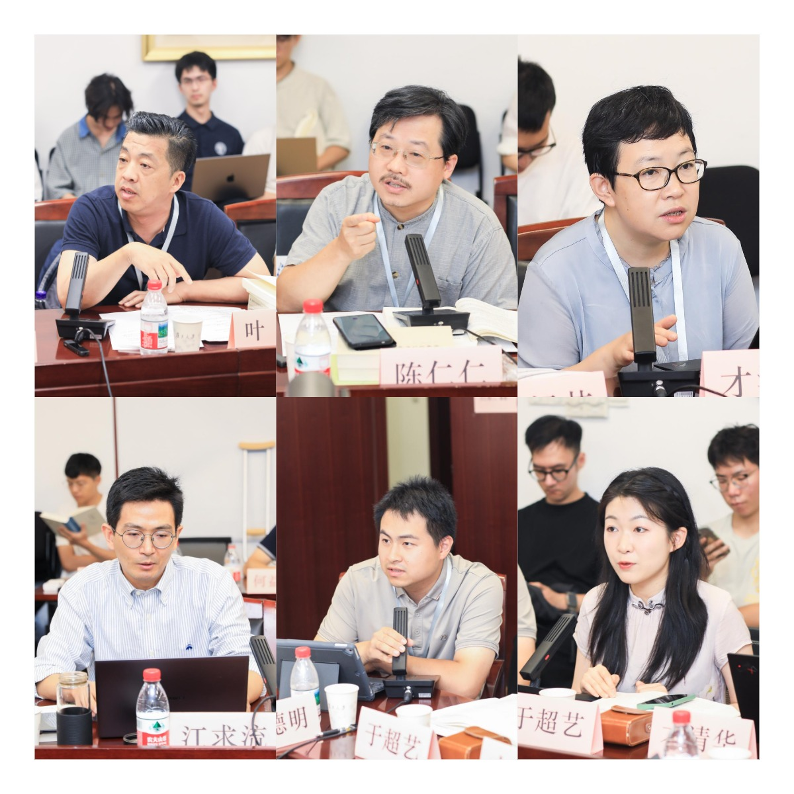
The second plenary session began with a presentation by Professor Ye Ping from Henan University. Professor Ye noted that the interpretation of Lu Xiangshan’s remark that“Confucius illuminated the Way through Ren; his words were seamless, while Mencius expanded them in ten characters, leaving no shadow to hide. This was due to the difference in their times (夫子以仁发明斯道,其言浑无罅缝。孟子十字打开,更无影遁,盖时不同)”remains open to debate. Ye argued that whereas Zhu Xi’s theory favored conceptual analysis, Lu Xiangshan emphasized holistic integration. Thus, the“ten-character expansion”should be understood as highlighting the establishment of subjectivity, taking the Original Mind as the central axis of the“ten,”rather than as a mere“vertical and horizontal”unfolding. The notions of preserving the mind(存心)and exerting the mind(尽心)should therefore be viewed as a unified synthesis of ontology and praxis, and to separate them would run counter to Lu Xiangshan’s resistance to conceptual fragmentation.
Professor Chen Renren from Hunan University then emphasized that within the Song-dynasty Neo-Confucian context, Practical Learning belongs to the philosophical realm, referring to ontological reality: whether the principle-centered view (reality as li), the material-centered view (reality as qi), or the mind-centered view (reality as the activation of the original mind), all stress the actuality of inner moral practice. By contrast, in the late Ming and Qing Dynasties, Practical Learning referred to the statecraft learning of practical governance and social utility. In the Original Mind and Practical Learning, the term designates the former sense, revealing Lu Jiuyuan’s philosophical construction that anchors reality(实)in the ontological self-realization and practical cultivation of the original mind—that is, the mind’s self-attainment as the inner reality itself. Chen added that distinguishing this Neo-Confucian concept of Practical Learning from the later statecraft discourse helps clarify that both the self-realization of the original mind and statecraft practical learning are internal developments within Confucian thought, the former offering a deeper moral foundation for the latter.
Associate Professor Cai Qinghua from Fudan University observed that the Original Mind and Practical Learning deconstructs the monolithic interpretive model of Lu Xiangshan’s dictum“All the Six Classics are notes to me(六经注我),” unveiling the dynamic interaction between classical learning evolving into Neo-Confucian philosophy and reconstructing the Classics through moral mind. The book keenly captures the duality of Lu Xiangshan’s language both analytically as in classical exegesis and performatively guiding moral praxis. This not only challenges Mou Zongsan’s established view that Lu Xiangshan’s discourse is merely “heuristic language,” but also demonstrates how textual form shapes philosophical expression, offering a compelling methodological model for interpreting seemingly discontinuous aphoristic texts.
Professor Jiang Qiuliu from Shaanxi Normal University highlighted that post-Confucian traditions rarely systematized the relation between virtue and happiness. Hence, when Lu Xiangshan served as a local magistrate, his decision to lecture on the Hongfan chapter “Accumulate blessings and bestow them upon the people(敛福锡民)” while criticizing Buddhist doctrines of external correspondence between virtue and happiness was highly significant. Rooted in the School of Mind, Lu redefined happiness as an inner state rather than external longevity or wealth, asserting that tranquility arises from moral integrity, not divine favor. This reveals the core divergence between Confucianism’s self-cultivational path to blessings and Buddhism’s faith-oriented path, showcasing Lu’s distinctive voice in Confucian-Buddhist debates and echoing Kant’s reflections on the moral relation between virtue and happiness.
Associate Researcher Jiao Deming from the Jiangsu Academy of Social Sciences stressed that the Original Mind and Practical Learning exemplifies the vitality of a historically grounded methodology for Chinese philosophy, offering younger scholars a concrete model for such inquiry. The book’s close textual analyses are particularly illuminating. First, its examination of cases such as“mourning at the graves and revering in the ancestral temple(墟墓兴哀宗庙钦)” reveals both the anthropological depth of the Original Mind concept and its linkage between philosophical ideas and broader intellectual history. Second, in discussing Lu’s theory of Cultivation, the analysis of“the method of deep plowing and easy weeding(深耕易耨之法)” shows how Lu’s attention to agricultural technique reflects the germination of Practical Learning characteristics later developed in the Ming and Qing Dynasties, encouraging scholars to explore the connection between thought and technical practice.
Finally, Lecturer Yu Chaoyi from Hunan University pointed out that the Original Mind and Practical Learning not only fills a major scholarly gap in research on Lu Xiangshan’sstudies on the Spring and Autumn Annals, but also refreshingly interprets his engagement with the mid-Tang scholar Tan Zhu’s new tradition on the Spring and Autumn Annals as a key step in transforming the Study of Confucian Classics into Neo-Confucian philosophy. She added that Lu’s moral vision of being“reverent inwardly in mind and respectful outwardly in ritual(内惧于心,外恪于礼)” aligns with themes in the Gongyang’s Commentary such as “following the hearts of the people and ministers.(缘民臣之心)”Moreover, the book’s discussion of Lu’s handling of the Song dynasty’s dilemma between vengeance and peace linked to the Gongyang idea that“the Spring and Autumn Annals recognizes no righteous wars(春秋无义战)”, demonstrating the philosophical tension in Lu’s Spring and Autumn thought, offering fertile ground for further exploration.
Third Panel
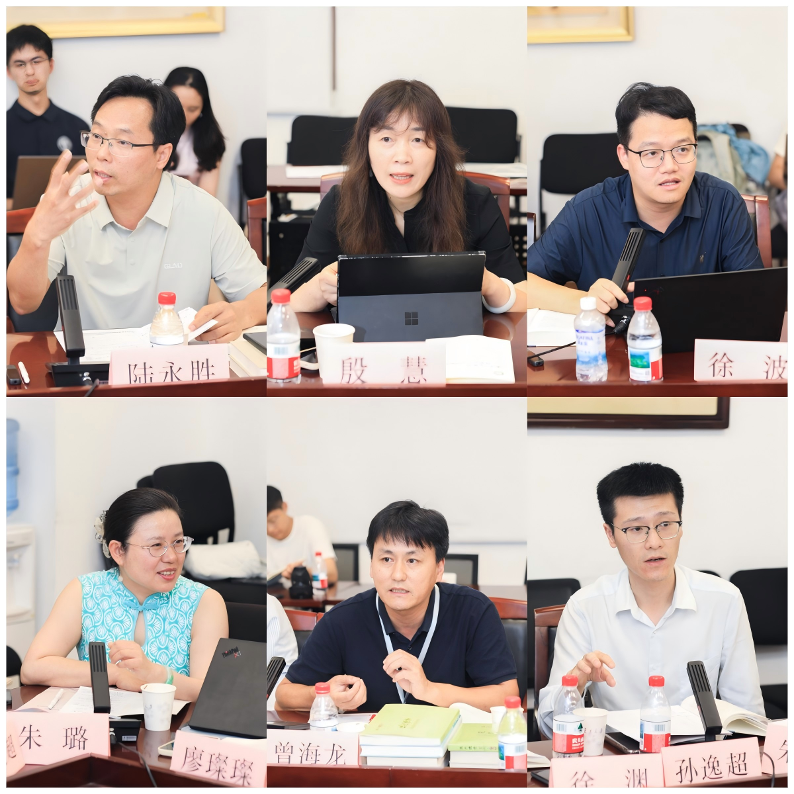
The third plenary session in the afternoon began with a presentation by Professor Lu Yongsheng from Southeast University. Professor Lu pointed out that the Original Mind and Practical Learning analyzes Lu Xiangshan’s thought of Practical Learning through a methodology of inwardness, breaking through the conventional paradigm of philosophical historiography and offering significant insights for rethinking the intellectual history of the Study of the School of Mind. He further proposed positioning Lu Xiangshan’s philosophy as the origin of the Learning of the Original Mind, with Wang Yangming’s school and others regarded as post-Xiangshan Learning. On this basis, he suggested extending inquiry toward the external, social dimension, constructing a sociological framework encompassing four interrelated layers, doctrinal institutionalization, politicization, secularization, and academicization, thereby providing a coherent intellectual genealogy for understanding the social formation of the School of Mind.
Professor Yin Hui from Hunan University then emphasized that the Original Mind and Practical Learning embodies a distinctive feature of using Zhu Xi’s method to examine Lu Xiangshan’s mind philosophy. Through a dialectical approach that applies Zhu Xi’s rigorous hermeneutics to elucidate Lu’s relatively open discourse, the book not only traces Lu Jiuyuan’s praxis of true principle, true affairs, true virtue, and true practice, but also reconstructs his philosophical decision of first establishing the Original Mind within the Study of Confucian Classics. In doing so, it presents a richer and more pluralistic image of Lu Xiangshan’s thought and provides an important paradigm for contemporary scholarship seeking to continue the Confucian tradition as the living “bloodline of learning.”
Associate Professor Xu Bo from Fudan University shared that his engagement with Professor He’s work began with The Intellectual Schism between Late Ming Thought and Western Learning(《晚明与西学思想的裂变》), which discussed the relationship between Liu Jishan’s Record of Humanity(《人谱》)and both Buddhist and Jesuit ideas. He noted that The Original Mind and Practical Learning similarly responds to questions of dialogue between Chinese and Western philosophy. For instance, in the book’s postscript, Professor He addresses Professor Chen Lai’s question of whether Lu Xiangshan’s concept of the Original Mind is “transcendental” or “empirical.” Xu analyzed that within Neo-Confucianism of the Song and Ming Dynasties, Professor He has achieved a rare balance between Mou Zongsan’s philosophical construction and Yu Yingshi’s intellectual-historical approach. His scholarship demonstrates both breadth of vision and methodological inclusiveness while maintaining intellectual leadership and a tone of gentleness and scholarly humility, offering a model of methodological elegance.
Associate Professor Zhu Lu from Shanghai University of Finance and Economics argued that Professor He’s research framework in the Original Mind and Practical Learning also illuminates how the Confucian concept of Practical Learning can speak to modern social questions. Using as examples the development of Hunan merchants in modern Shanghai and the early Chinese translation of “capital” as “母财”(“mother wealth”), Professor Zhu suggested that traditional cultural values can reframe capital as an economic medium emphasizing inclusivity and circulation, thereby endowing commercial practice with renewed cultural depth.
Professor Zeng Hailong from Shanghai University observed that the Original Mind and Practical Learning continues and deepens Professor He’s dialectical framework, such as his earlier contrast between Lu Xiangshan’s view of the Dao as process and Zhu Xi’s view of the Dao as order, and further applies it here. This framework profoundly reflects how it shaped the intellectual foundations of inner moral construction and the internalization of the political-ethical order as Confucianism shifted from the external scholastic form of the Study of Confucian Classics in the Han and Tang Dynasties to the inward subjectivity of Neo-Confucianism of the Song and Ming Dynasties.
Finally, Associate Professor Sun Yichao from Shanghai Normal University noted that the Original Mind and Practical Learning breaks through the limitations of grand narrative, reconstructing the historical reality of the School of Mind in Southern Song Dynasty from three dimensions: the civil service examination system, family culture, and regional traditions. This marks an important methodological shift in Neo-Confucian studies from purely philosophical interpretation to historical reconstruction through the mutual corroboration of “events, institutions, and texts.” He further explained that by tracing the Lu family’s social transition from commoner to official household status, one can map the distinctive academic networks and intellectual influences that characterized the East Zhejiang region.
Fourth Panel
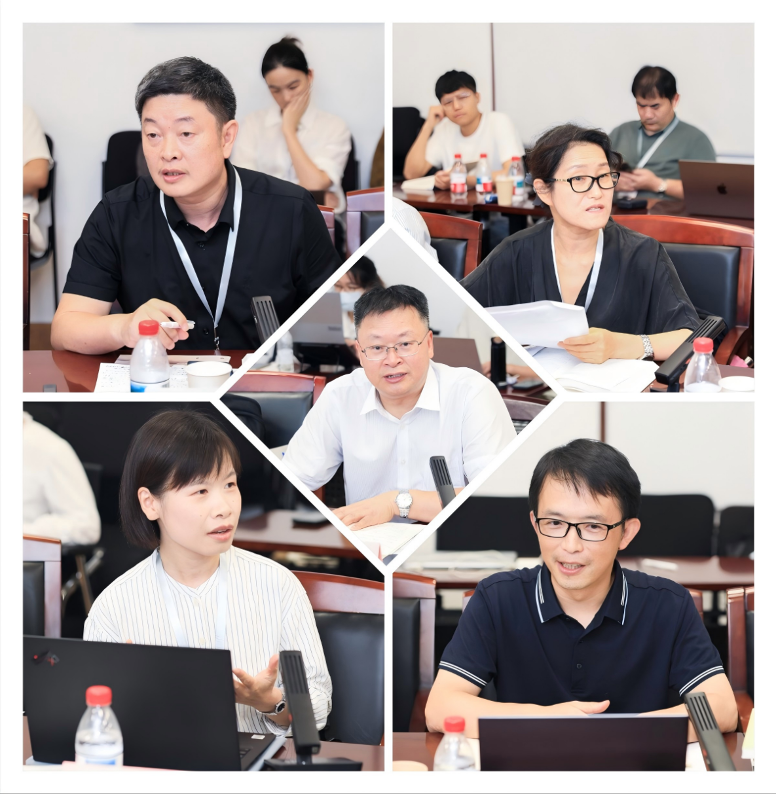
The fourth plenary session began with a presentation by Professor Yu Zhiping from Shanghai Jiao Tong University. Professor Yu observed that Professor He’s interpretation of Lu Xiangshan’s ideas of “All the Six Classics are notes to me” and “I am a note to the Six Classics” breaks away from conventional stereotypes in the Study of the School of Mind, clarifying that Lu’s statement “All the Six Classics are notes to me” is not a form of private, subjective expression. Rather, the Original Mind and Principle must still be verified through the textual manifestations represented by the Six Classics. Professor Yu further emphasized that Lu’s attitude toward the Study of Confucian Classics also offers inspiration for contemporary philosophical methodology that philosophy should not remain at the level of abstract conceptual analysis, but should focus on the belonging and meaningfulness of lived experience. Only in this way can philosophy serve as the foundation for the development of classical studies.
Professor Feng Bing from Xiamen University then discussed in detail the interpretation in The Original Mind and Practical Learning of Lu Xiangshan’s remark on “Mencius’ expansion in ten characters”and expressed some reservations about Professor He’s interpretation that takes “preserving the mind” as the vertical axis emphasizing knowing, and “exerting the mind” as the horizontal axis emphasizing acting. However, interpreting Lu’s proposition “the mind is principle” as “the mind possesses the capacity to know principle” reveals that Lu Xiangshan’s Theory of Mind is in some respects closer to Zhu Xi’s than to Wang Yangming’s, a perspective that may invite a re-evaluation of Lu’s place within the history of philosophy.
Associate Professor Wang Xuqin from Zhejiang Gongshang University pointed out that Professor He integrates intellectual history, classical scholarship, and philosophical analysis, puts relevant texts within their concrete historical and discursive contexts, thereby reconstructing the living world in which Lu Xiangshan was intellectually active and restoring vivid vitality to historical figures. Taking the Debate between the theory of Zhu Xi and that of Lu Jiuyuan as an example, Professor He deeply explores the inner world of both thinkers, placing their debate within the political context of the Neo-Confucian community under Emperor Xiaozong, revealing why Lu Xiangshan took a strong stance in challenging Zhu Xi. This approach illuminates the underlying consensus beneath their seemingly irreconcilable differences.
Associate Professor Yu Xiuling from Northwest University of Political Science and Law remarked that Professor He’s choice to approach Lu Xiangshan’s philosophy through The Original Mind and Practical Learning represents a refreshing and innovative perspective. By combining Lu’s living context and his interactions with other people, the book carefully reconstructs a vivid and living image of Lu Xiangshan, effectively overturning the long-dominant Western interpretive frameworks imposed upon Chinese philosophy and providing an autonomous model for individual case studies within the field.
Associate Professor Liao Cancan from Wuhan University noted that Professor He’s intellectual-historical approach is particularly well suited to the study of Lu Xiangshan’s thought. By entering Lu’s historical situation to uncover his problem-consciousness, Professor He opens up Lu’s philosophy from within, allowing readers to directly experience its distinctive texture. On one hand, by introducing Practical Learning into the study of Lu’s thought and his notion of the Original Mind, the work deepens the understanding of the internal logic of the Study of the School of Mind. On the other hand, it breaks through the conventional narrative that confines Practical Learning to the pragmatic statecraft orientation of Practical Learning in the Ming and Qing Dynasties, offering a paradigmatic model for the study of Practical Learning in Chinese philosophy.
Finally, Associate Professor He Yixin from Fudan University discussed the relationship between Mencius and Lu Xiangshan’s Theory of Mind, noting that the two-dimensional interpretation of “Mencius’ expansion in ten characters” in the Original Mind and Practical Learning is remarkably insightful. This interpretation captures the transition in early Confucian thought from Confucius’s seamless unity to the more structured and articulated framework of the disciples of later generations, while also providing a structural interpretive framework for understanding the Mencius envisioned by Lu Xiangshan in relation to his own Theory of Mind. However, Professor He Yixin also pointed out that the difference in the interpretation of Gaozi’s teachings remains a crucial issue for understanding the moral theories of both Zhu Xi and Lu Xiangshan, and that the Original Mind and Practical Learning could have engage this topic more deeply.
Fifth Panel
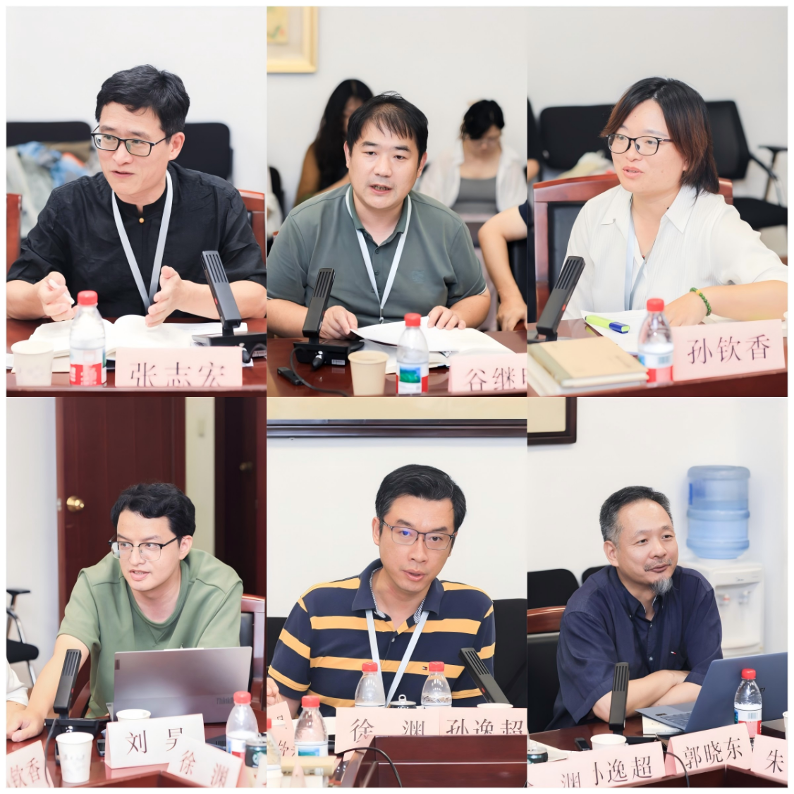
The final plenary session of the symposium began with a presentation by Zhang Zhihong, Researcher at the Shanghai Academy of Social Sciences. Zhang noted that the Original Mind and Practical Learning reveals how Lu Xiangshan placed particular emphasis on the Book of Changes(《周易》), though having written no exclusive commentary, making the “principle of change(易理)” the core of his teaching. Lu’s interpretation of the Book of Changes integrates moral principle and the emblems and numbers, suspends mystical readings, and stresses its practical function of “avoiding misfortune and seeking fortune.” He held that by grasping the cosmic principle one would “accord with it to bring about good fortune, or oppose it to invite misfortune,” thus exhibiting a distinctively experiential interpretation. Regarding the debate on Practical Learning, Zhang explained that as defined in the book, it refers to the operative knowledge arising from engaging with concrete affairs through the Original Mind. Hence, it does not denote the “anti-School of Mind” theory of the late Ming and early Qing Dynasties, but rather constructs a unified epistemological system in which the Original Mind serves as substance and Practical Learning as function. The Original Mind and Practical Learning thus presents a multidimensional view of Lu Xiangshan’s thought and sets a benchmark for future scholarship.
Professor Gu Jiming of Tongji University observed that the Original Mind and Practical Learning is not a conventional philosophical monograph. Instead, it deepens the author’s long-standing integrative approach seen in works such as The Construction of Neo-Confucianism in the Southern Song Dynasty(《南宋儒学建构》)and Western Learning and the Mutation of Thought of the Late Ming Dynasty(《西学与晚明思想的裂变》), demonstrating his methodological expansion across the histories of philosophy and thought. Professor Gu highlighted the account of Lu Xiangshan’s “snow pray” near the end of his life as an instance vividly expressing his compassionate Original Mind concerned with the people’s livelihood, showcasing Professor He’s keen attention to both philosophical and historical detail. Yet, by contrasting Lu’s experiential orientation with Zhu Xi’s metaphysical construction, the book raises an interesting question: As Zhu Xi emphasized metaphysical construction and Lu Xiangshan focused on the phenomenon of experience, if Wang Yangming’s School of Mind were categorized under Zhu Xi’s lineage, would this classification itself be contentious? This may invite different interpretations in the field.
Associate Researcher Sun Qinxian of the Jiangsu Academy of Social Sciences argued that The Original Mind and Practical Learning clarifies how Lu Xiangshan’s Theory of Mind employed Practical Learning to avoid later criticisms of the School of Mind’s subjectivism. Lu transformed ontological awareness into social praxis through the genuine mind in real affairs(实心实事), a feature that distinguishes his thought from Wang Yangming and his followers, whose study of Cultivation centered on inner consciousness. However, whether Lu’s Theory of Mind can adequately respond to the late Ming and early Qing Confucians’ charge of the School of Mind’s emptiness remains open to discussion. In this regard, introducing Wang Fuzhi’s notion of Force(势)might enrich comparative studies and contribute to a fuller understanding of the theoretical formation of the lineage of the School of Mind.
Assistant Professor Liu Hao of Tongji University emphasized that in studying ancient Chinese philosophy, one must recognize that thinkers were not purely philosophers in the modern sense. They often played the roles of judges and rule-makers as well. Because Lu Xiangshan’s form of knowledge has traditionally been regarded as less systematic than that of Zhu Xi, the conventional paradigm of the history of philosophy has tended to overlook him. The Original Mind and Practical Learning breaks through this convention by insisting on understanding Lu’s thought within the lifeworld, highlighting that this relationship is not a simple addition of life and philosophy, nor a determinism in which economics dictates thought, but rather a dynamic and integrative interaction between the two. The notion of Practical Learning stresses the Confucian spirit of applying learning to concrete affairs and realizing knowledge through achievements in practice. This orientation, carried forward by Lu’s disciples, influenced the School of East Zhejiang, which valued engagement with the world and mastery of statecrafts, embodying Confucian moral principles in daily practice. It even exerted a far-reaching impact on evidential scholarship in the Ming and Qing Dynasties as well as on East Asian Confucianism.
Associate Professor Xu Yuan of Fudan University noted that as a scholar of the Study of Confucian Classics from the pre-Qin to the Han Dynasty, he has recently turned to the transformation of Confucian scholarship from the Sui and Tang Dynasties to Neo-Confucianism of the Song and Ming Dynasties. The Original Mind and Practical Learning provides an effective bridge for this inquiry. By placing Lu Jiuyuan’s exegetical practice within the context of Neo-Confucianism, the book demonstrates how Lu drew upon the tradition of the emblems and numbers to construct his Theory of Mind, and contrasts this with Zhu Xi’s focus on the objectivity and Lu’s emphasis on subjective creativity. Overall, the book’s language is concise and its textual analysis lucid, transcending the boundaries of the conventional framework of the history of philosophy. It not only restores the vitality of Lu’s lived scholarly practice but also offers a model for integrating the histories of philosophy and scholarship.
Professor Guo Xiaodong of Fudan University concluded that the academic contribution of The Original Mind and Practical Learning lies not only in demonstrating that Lu Xiangshan’s Theory of Mind marks the full transformation from the Study of Confucian Classics to Neo-Confucianism, but also in revealing how the epistemic form of the School of Mind became possible. That is, how the Original Mind makes possible the construction of a universal form of knowledge in its orientation toward reality.This continues Professor He’s methodological lineage from Yu Yingshi, emphasizing historical contextualization. Yet, Professor Guo questioned whether a purely epistemological perspective can adequately encompass the core philosophical propositions of Neo-Confucianism of the Song and Ming Dynasties. While such an approach foregrounds the generative structure of knowledge, it may at times risk diminishing the interpretive depth of specific arguments.
Finally, Professor Xu Bo expressed gratitude to all participants who had traveled from afar. Professor He Jun then briefly responded to several issues not fully discussed in the book and questions raised during the discussion. The conference thus concluded successfully.