
▲Group photo of all participants
The Sino-Australian Philosophy of Life Sciences Network (SAPoLSN) is a collaborative initiative jointly established by the School of Philosophy Fudan University, the Department of Philosophy Peking University, the Institute of Philosophy of the Chinese Academy of Social Sciences, and the Department of Philosophy Macquarie University in Australia. Its main goal is to introduce students and young scholars to the latest developments in the philosophy of life sciences, and to promote cooperation in education and research between Chinese and international philosophers of science. From August 10 to 16, 2025, the Second International Graduate Summer School of SAPoLSN was successfully held at the School of Philosophy Fudan University.
The theme of this year’s summer school was “Cognition Across the Tree of Life”, focusing on whether non-human animals and non-animal forms of life, such as plants and slime molds possess cognitive and psychological capacities such as causal reasoning, rational decision-making, or understanding of death. The program further examined key conceptual and methodological issues in comparative cognition, aiming to develop a systematic understanding and reflection on “cognition” from a cross-species perspective.
The two principal lecturers were Prof. Marta Halina from the University of Cambridge and Assoc. Prof. Susana Monsó from the Universidad Nacional de Educación a Distancia (UNED), Spain. Other distinguished speakers included Prof. Alan Love (University of Minnesota, USA), Asst. Prof. Luke Kersten (University of Alberta, Canada), Dr. Matthew Sims (University of Cambridge, UK), and Dr. Miguel Segundo Ortín (University of Murcia, Spain). These scholars delivered lectures and provided continuous academic guidance forparticipants throughout the week.
A total of 32 graduate students participated, coming from prestigious institutions such as Peking University, Tsinghua University, Fudan University, Shanghai Jiao Tong University, Renmin University of China, Zhejiang University, Sun Yat-sen University, University of Chinese Academy of Sciences, East China Normal University, Beijing Normal University, Shanghai Normal University, Shanxi University, the Hong Kong University of Science and Technology, the University of Missouri (USA), University of Bristol (UK), École Normale Supérieure (France), the University of Barcelona (Spain), and Macquarie University (Australia).
Young scholars from the SAPoLSN committee also participated, including Zhang Mingjun and Liu Haoying from Fudan University, Lu Qiaoying from Peking University, Wu Qiantong and Jiang Yihan from the Institute of Philosophy, Chinese Academy of Social Sciences, and Pierrick Bourrat from Macquarie University. Prof. Liu Chuang, Distinguished Professor at Fudan University and Chair of the Department of Philosophy of Science and Logic, also attended and participated in part of the activities.

▲School instructors and the SAPoLSN committee
Opening Ceremony
The opening ceremony took place on the morning of August 11 in Room 105, West Annex, Guanghua Tower, Fudan University. It was chaired by Dr. Zhang Mingjun from the SAPoLSN committee. Prof. Zhang Shuangli, Dean of the School of Philosophy at Fudan University, delivered the opening address, commending SAPoLSN’s efforts in fostering international collaboration. As a member of the SAPoLSN Advisory Board, Prof. Alan Love then shared his personal story with SAPoLSN. A distinctive “90-second self-introduction” session followed, where each teacher and participant introduced their academic background, research interests, and a brief personal story in 90 seconds using a single slide. This creative format quickly built rapport and set a warm and friendly tone for the week ahead.

▲Professor Zhang delivering the opening address

▲Professor Love delivering the address

▲a participant making a 90-second self-introduction
Thematic Academic Lectures
The core component of the summer school was a series of six thematic lectures under the general theme “Cognition Across the Tree of Life,” offering cutting-edge insights and broad theoretical perspectives.
The first lecture was given by Professor Marta Halina from University of Cambridge, themed “Beyond Human: Animal Insights into Intuitive Physics”. Professor Halina stated that though intuitive physics is generally regarded as an important framework for human understanding of the world, recent studies have shown that non-human animals also display capacities for causal reasoning that go beyond their instinct. Professor Halina first introduced the current research methods in animal intuitive physics and pointed out a major limitation of the existing framework: it relies too heavily on indicators such as “successfully completing test tasks,” while overlooking the possible biases and constraints in animals’ causal cognition. Thus, she proposed four supplementary approaches: exploratory experimentation, direct human-animal comparison, reference to Newtonian mechanics, and computational modeling for causal biases and limitations. She emphasized that integrating formal models with empirical work could enhance methodological rigor in comparative cognitive science and deepen our understanding of cognitive similarities and differences between humans and animals.

▲Professor Marta Halina
The second lecture was given by Doctor Matthew Sims from University of Cambridge, themed “Acellular Slime Mold: A Jumping-off Point for Exploring Different Notions of Biological Memory” . Doctor Sims took the slime mold’s habituation-based learning-like behavior as his cutting point to discuss whether different levels of biological memory should be included within the scope of cognitive research. By distinguishing among cellular memory, immune memory, individual memory, and collective memory, he proposed an analytical framework of the “metabolic individual,” emphasizing that memory attains cognitive explanatory relevance only at the level where it directly serves persistence and adaptation. Based on this, cellular and immune memories should not be regarded as a cognitive process, whereas individual and social memories may qualify discussions in the sense of cognitive. In the end, he pointed out that slime molds, though controversial, thus offer valuable insight into the nature of memory and the limits of cognitive explanation.

▲Doctor Matthew Sims
The third lecture was given by Associate Professor Susana Monsó from UNED, themed “Do Animals Understand Death?” From the perspective of comparative thanatology, Monsó reviewed animals’ complex reactions to death among whales, chimpanzees, and elephants, and argued that such behaviors may indicate a concept of death. She criticized two prevalent anthropocentric biases in the field: overemphasis on rational capacities and overemphasis on grief as the defining reaction to death. Proposing the notion of a minimal concept of death, she suggested that an animal can be said to understand death if it distinguishes living from dead bodies and recognizes the irreversibility of functional loss. This suggests that the concept of death is not unique to humans but may be relatively widespread in the natural world.

▲Professor Susana Monsó
The fourth lecture was given by Doctor Miguel Segundo Ortín from University of Murcia, themed “Cognition in Plants? A Philosophical Analysis of the Empirical Evidence” . Centered on whether plants exhibit cognitive abilities, his lecture responds to three objections concerning reactivity, lack of a brain, and absence of representations. Drawing on empirical studies of risk-sensitive decision-making, mimicry, and habituation, he argued that plants display cognitive characteristics like behavioral flexibility, adaptation, memory and weighing pros and cons. Finally, he emphasized that incorporating plants into comparative psychological research helps challenge traditional assumptions such as “brain-centrism,” and called for the establishment of more standardized experimental paradigms and classification systems for plant behavior to advance the scientific development of this interdisciplinary field.

▲Professor Miguel Segundo Ortín
The fifth lecture was given by Professor Alan Love from University of Minnesota, themed “Organismal Agency and Goal-Directed Behavior: Concepts and Controversies” . Professor Love revisited the longstanding debate on teleological thinking and agency in biology. Advocates regard agency as an intrinsic property of life and a starting point for biological inquiry; critics see it as explanatorily empty. He proposed a fragmentation strategy, recognizing multiple context-dependent meanings of “agency” and applying them distinctly. Love concluded that purposive and agential language retains significant methodological value in contemporary biology.

▲Professor Alan Love
The last lecture was given by Assistant Professor Luke Kersten from the University of Alberta, themed “A ‘Pressing’ Problem for Embodied Cognition: A Mechanistic Proposal.” He focused on a theoretical tension within embodied cognition research: the body is regarded both as a unique and irreplaceable component of cognition (the body-centerism) and as one element within a larger functional system, whose role depends on its functional contribution to information processing (extended functionalism). If this tension cannot be resolved, both the distinctiveness and theoretical coherence of embodied cognition would be threatened. Kersten first analyzed the functionalist approach to this problem, arguing that it relies too heavily on the distinction between function and structure, making it difficult to account for the body’s specific contribution. He then proposed a mechanistic solution: to treat functional analysis as a sketch of mechanisms that must be integrated with the structural properties of the body in order to fully explain cognitive phenomena. This proposal accommodates the body-centered emphasis on structural constraints while remaining compatible with the functional analytical framework of extended functionalism, thereby offering a possible reconciliation between the two.

▲Assistant Professor Luke Kersten
Interactive Sessions and Group Discussions
Beyond lectures, the summer school emphasized active engagement, which is one of the highlights, ensuring that the participants were not merely passive listeners, but truly engaged and active throughout the process. Participants received preparatory readings two weeks in advance, and following each lecture, another instructor provided commentary and raised questions. Students then joined group discussions led by the lecturers, culminating in an open Q&A session. This structure encouraged critical thinking, active participation, and peer collaboration, as well as creating a casual atmosphere.
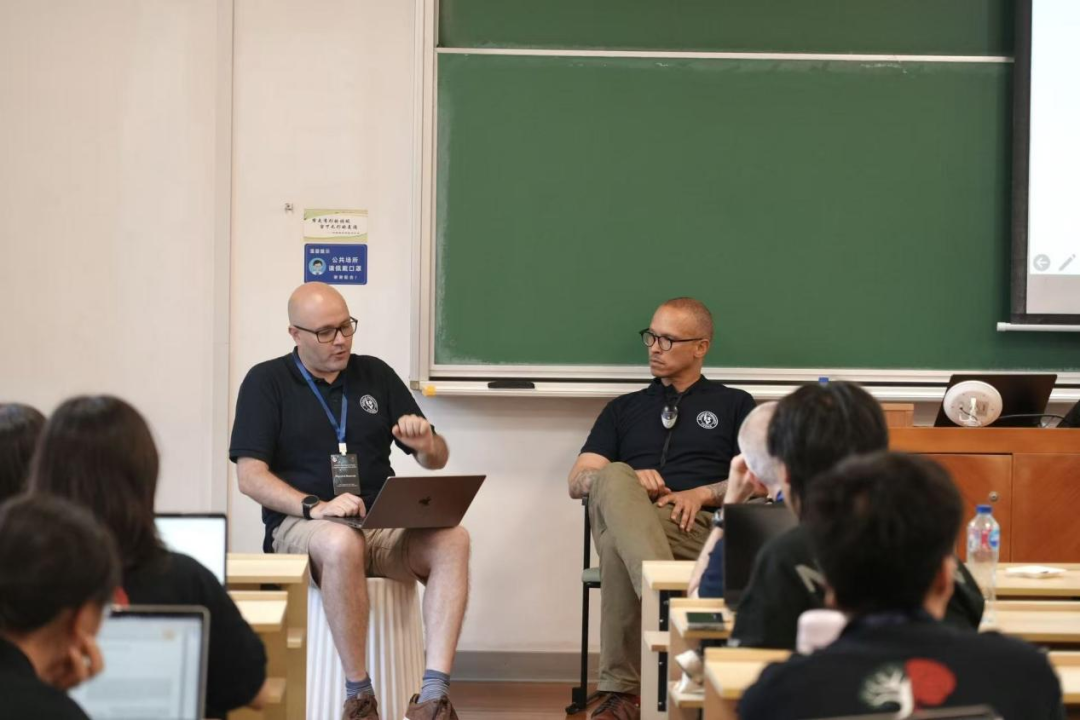
▲Pierrick Bourrat commenting on the speech of Doctor Matthew Sims

▲group discussions between teachers and students

▲ Q&A
In addition to the thematic lectures, another major focus of the summer school was a variety of practical activities, including workshops on academic skills, a well-being roundtable, and personalized mentoring sessions. The instructors drew on their own research and professional experience to share valuable insights on topics such as thesis selection, writing and publication, academic networking, and maintaining a balanced scholarly life.
Academic Skills and Career Development
Compared to other disciplines, philosophy demands unique modes of inquiry and writing. To this end, the summer school featured workshops on “Academic Skills and Career Development”. Professor Marta Halina and Associate Professor Susana Monsó designed four academic philosophy skill training sessions centering on “How to Formulate a Good Philosophical Question,” “How to Write a Philosophy Paper,” “How to Publish in Philosophy,” and “How to Engage in Public Philosophy”. The participants carried out targeted group exercises based on the tasks assigned by the instructors. In addition, Prof. Alan Love, Dr. Lu Qiaoying, and Dr. Pierrick Bourrat shared valuable experiences from their own careers regarding participation in international conferences, building academic connections, and applying for visiting scholar positions

▲Professor Marta Halina and Associate Professor Susana Monsó co-chairing a lecture on academic skills

▲group discussions among students
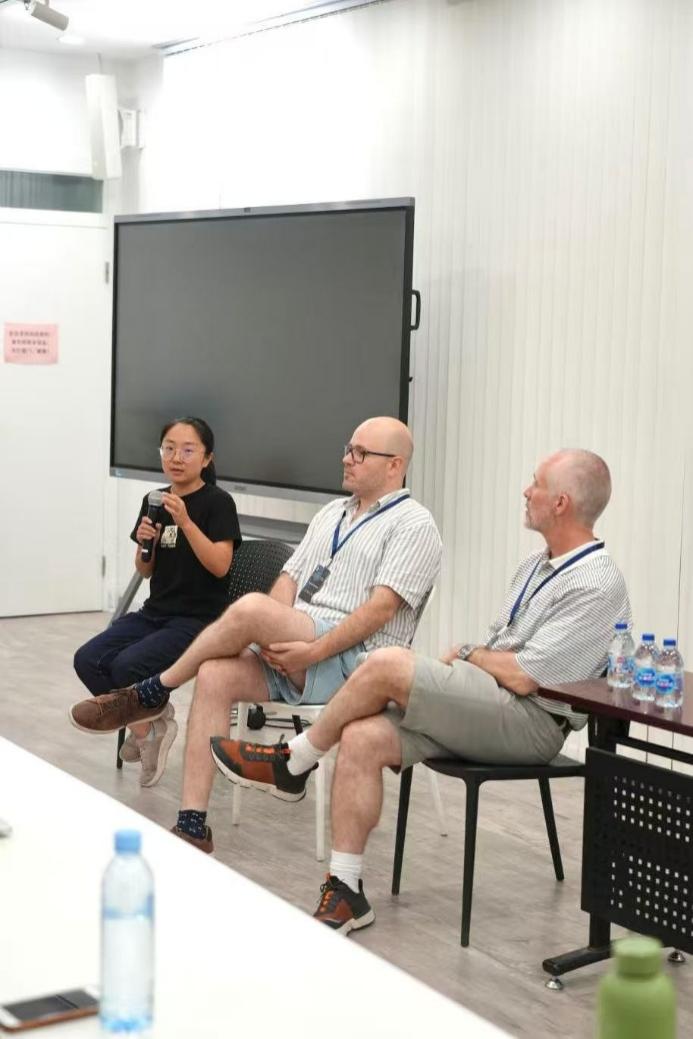
▲Prof. Alan Love, Dr. Lu Qiaoying, and Dr. Pierrick Bourrat sharing career experience
One-on-One Office Hours
To foster deeper exchange, the program offered individual Office Hours, where participants could schedule appointments with instructors in advance according to their own research interests and receive more personalized and targeted advice through face-to-face conversations.


▲instructors offering one-to-one instructions
Well-being Roundtable
Acknowledging the prevalence of mental health challenges in academia, the roundtable “How to Maintain Mental and Physical Well-being” invited students to submit anonymous concerns, which mentors addressed with empathy and personal reflections. The discussion on impostor syndrome particularly resonated, helping participants recognize that psychological distress is widespread in academia, and that it is important to acknowledge it and actively seek support, thereby approaching future academic pursuits with a healthier and more confident mindset.


▲Well-being Roundtable
Closing Ceremony
After a fulfilling and busy week, the closing dinner of the summer school was held on the evening of August 16 on the second floor of MeiYi Hotel. The main instructors Professor Marta Halina and Associate Professor Susana Monsó expressed their gratitude to the School of Philosophy Fudan University, as well as to all the mentors, students, and staff who participated in the program. They were joined by Dr. Zhang Mingjun from Fudan University and Prof. Alan Love, advisor to SAPoLSN, to present each participant with a certificate of completion and a commemorative gift, followed by group photos. The evening concluded in a warm and cheerful atmosphere, marking the successful end of the summer school.

▲Instructors presenting certificates to the participants
The successful organization of The Second International Graduate Summer School of the Sino-Australian Philosophy of Life Sciences Network (SAPoLSN) provided a valuable platform for young scholars from China and abroad to broaden their horizons, engage in in-depth discussion, establish academic connections, and receive professional support. This event is expected to have a positive and lasting influence on the development of the philosophy of life sciences in China. Next year, SAPoLSN will continue to host a series of academic events, including the graduate summer school and academic workshops, which will take place at Macquarie University, Australia. Scholars and students interested in the philosophy of life sciences are warmly encouraged to stay engaged and take part.
Participants’ Reflections
“A truly distinctive experience! Having the chance to communicate with experienced international scholars allowed me to feel their academic attitudes and ways of thinking, which was deeply inspiring. They are real, living people, and I also sensed their approach to life and other matters through dinners and conversations after class, especially during the well-being roundtable, where I realized that their world is not only about research when they also taught us how to live healthily and choose work and environments that suit us. All of this was so helpful! The all-English communication was also very beneficial. Being immersed in such an environment made me naturally learn how to express myself, and the teachers were so patient. It was an ideal atmosphere for growth. Overall, I believe programs like this will greatly benefit more young scholars in the future.”
“Wonderful experience! People here are super supportive! I appreciate it a lot and I'd definitely love to come back next time, either as a student or as a volunteer to help you guys out. And I do think this year's schedule is very well-planned. It's productive but not overwhelming, thanks largely to the absence of a final project.”
“It really broadens my horizon of the connections among biology, cognition and animal ethics. I am so grateful that I could have opportunities to exchange my ideas with excellent scholars and had some positive feedbacks. It’s so amazing to get in touch with scholar in person whom I got to know by reading their papers.”
“Whether it was learning how to approach problems professionally or adopting new study and lifestyle habits, I found this summer school to be comprehensive. If I were to recommend it to other students, I would definitely say that it is a must-attend experience at least once in a lifetime! Moreover, I truly felt the efforts made by the organizers to promote global progress in philosophy, which deeply moved me. For China’s academic philosophy environment, this is indeed an excellent means to broaden students' horizons.”