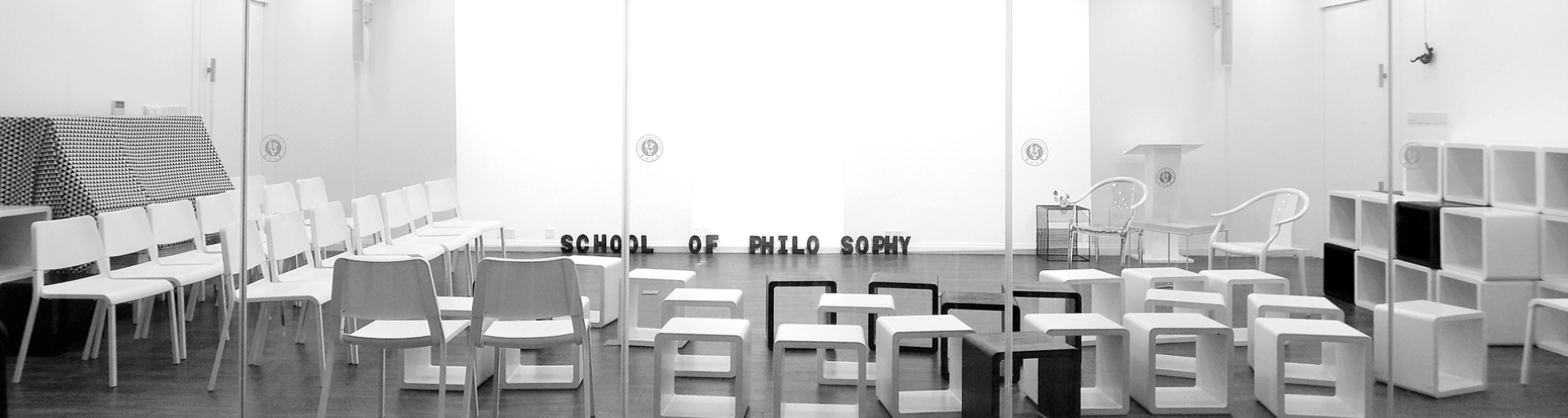
Intro: From 20 to 21 September 2025, the symposium “The Divergence and Convergence of Pre-Qin Confucian and Daoist Thought” was held at Guanghua Building, Fudan University. Organized by the School of Philosophy at Fudan University, the meeting brought together more than thirty scholars from over twenty universities and research institutes at home and abroad, including Peking University, Renmin University of China, the Chinese Academy of Social Sciences, Nanjing University, Sun Yat-sen University, Nankai University, East China Normal University, Chinese Culture University (Taiwan), Seoul National University (Korea), and Fudan University. Discussion was lively and the results substantial.
The opening ceremony was chaired by He Yixin. Zhang Shuangli, Dean of the School of Philosophy at Fudan, delivered the welcome address on behalf of the school. Dean Zhang warmly welcomed the participants and noted that Pre-Qin philosophy has recently become one of Fudan’s focal areas of development; she expressed the hope that the symposium would gather the intellectual resources of domestic and international scholars and jointly advance several important research questions. In the keynote lecture, Chen Guying presented “On Confucius’ and Laozi’s Conceptions of Self-cultivation and Statecraft in the Text of the Daodejing. Combining autobiographical reflections with his research trajectory, Chen explained why he has focused on the relationship between Confucius and Laozi and on the question of Confucian–Daoist convergence, and he addressed controversies surrounding the claim that there is a single dominant trunk to Daoist philosophy. Focusing on self-cultivation and statecraft and close readings of chapters 8, 10, and 19 of the Daodejing, Chen compared the received text with the Guodian manuscript and reexamined Laozi’s attitude toward the concepts of ren and zhi.
Over the following two days, participants engaged in multi-faceted and multi-layered discussions around the symposium’s central theme: the divergence and convergence of Pre-Qin Confucian and Daoist thought.
I. On “Dao”
Comparative discussion of Confucianism and Daoism concentrated first and foremost on the fundamental concept of Dao. For Daoists, Dao is the source of generation and the ground of order; politically it finds expression in the ideas of non-action (wuwei) and mysterious virtue (xuande). For Confucians, by contrast, Dao primarily denotes the human Way—the foundation of order in mind-body life and in social life.
Interpretation and comparison of the concept of Dao constituted the most concentrated theme of the symposium. Cao Feng used the aphorisms “the benevolent are like archery” and “is it not like drawing a bow?” to probe similarities and differences between the two traditions: Confucian authors link archery to ren and li , stressing humility, self-examination, and the mean; Daoist authors associate the image of drawing a bow with Dao, emphasizing reversal, balance, and counter-movement. Bai Huihong offered a new reading of the Daodejing passage “Dao gives birth to One” , arguing that “one” indicates absoluteness and unity, “two” signals relativity and difference inherent in things, and “three” unites absoluteness/unity with relativity/diversity. Su Hang traced the intellectual sources of the Daoist thesis that “Dao’s nature is ziran” and argued that situating this idea within the broader contexts of Daoist and religious Daoist thought and in the era of Buddhist–Daoist debates yields a truer understanding of its meaning. Chen Yan, drawing on the structural form of the bronze axle hubs from the Qin mausoleum, reinterpreted chapter 11 of the Daodejing; he maintained that a reading that pairs the punctuated phrase “when there is nothing” with an interpretation that gives equal weight to being and non-being is more convincing, and he pushed the plausible latest date for Laozi’s mature composition of chapter 11 to the mid-to-late Spring and Autumn period. Li Zhipeng, taking Laozi’s criticisms of li and fore-knowledge as his point of departure, examined moral sentiments and order in Laozi’s philosophy and argued for acting according to Dao, cultivating natural moral feeling and constructing a moral order congruent with Dao. Fan Bocheng analyzed Yan Zun’s cluster of concepts centered on xu and wu, showing how “emptiness” contains both the inscrutability and generative power of Dao, and traced the “Dao–De–Wu” conceptual system Yan constructs as characteristic of his reading of the Laozi. From the perspective of translation and reception, Xin Hongjuan borrowed methods from conceptual history and, via a “theoretical journey” lens, systematically examined how the core concept of Dao has been translated and its meaning reconstructed in the English-speaking world over the past century.
In the political domain, Dao was discussed in relation to the contrast between Daoist non-action (wuwei) and Confucian action (youwei), which was a focal point of the meeting. Although Confucius occasionally uses the language of non-action, its sense differs markedly from the Daoist usage. Yang Jie examined both divergence and overlap in Confucian and Daoist conceptions of non-action and action, noting that while they propose different routes to governance, their evaluative orientations permeate one another and their ideal horizons ultimately converge. In a complementary move, Luo Xiang offered a new interpretation of Daoist dismissals of active achievement (wugong) and argued that rulers should emulate the Dao’s xuande to avoid the psychic alienation bred by ambition for rank and fame, thereby allowing the people to recover their “natural I” and realizing the ideal personae of sage and spirit. Sun Yongwei contended that Daoist xuande has both political-philosophical and moral-psychological dimensions, with Laozi emphasizing the former and Zhuangzi closely linking the category to xing. By contrast, Wang Yiming argued that Xunzi rejects the xuande tradition’s picture of human nature as shallow in desire and thus defended the necessity of governance through “awe-inspiring pattern” (wei yi) to achieve an ordered polity. Wei Zhihong observed that the Huainanzi corrected defects in both Confucian and Daoist Pre-Qin positions by introducing concepts such as historical change (shibian) and sincere heart (chengxin), and that these adjustments influenced political thought in the Wei-Jin period.
II. Theories of Human Nature, Mind, and Cognition
Philosophical inquiry into human self-understanding was another central theme. In the Pre-Qin context this took the form of debates about human nature (xing), theories of mind and temperament (xin-xing), and theories of resonance and cognition (gantong and zhiliang). The former cluster addresses the constitution of the human being; the latter addresses the fundamental relations between humans and the world.
Theories of human nature were a shared topic of discussion, and scholars approached it on several levels. Deng Bingyuan drew attention to the tensions among moral capacity (dexing), cognitive capacity (zhixing) and material capacity (caixing), reconstructing the internal logic of different Pre-Qin theories of human nature; using records of Confucius’ questioning of Laozi, he highlighted points of convergence between the two traditions on questions of human nature. Zhang Yifan argued that Laozi’s concept of ziran was later expanded into a doctrine of “thingly nature” , thereby forming a contrast with ren-yi in later discourse, although this was not the unanimous view of all Daoist authors. Relatedly, the concepts of xin and qi were discussed at length. Ji Lei argued that in Zhuangzi the homogeneity of xin and xing is paired with a distinction between xin and shen , contending that the Zhuangzi’s life structure is “form–shen” rather than “form–xin”. Wu Zugang argued that the qi discussed in Xunzi displays a twofold morphology: one ontological unity (qi as such) and two manifestations (a bodily form and a mental/spiritual form), and he used this framework to explore Xunzi’s regimen-centered approach to self-cultivation that focuses on regulating qi. Misha Tadd (Tai Mixia) examined Xue Hui’s commentary on the Laozi , noting Xue’s view that Confucius and Laozi share a family resemblance and belong to a common “gnosis of life and destiny”, reflecting the Ming-dynasty scholarship’s pro-convergence stance.
Relation between self and world gives rise to resonance and cognitive activities—another joint concern of the two traditions. Wu Baolin focused on the notion of “tong”, investigating the cultivated state of “subtle and mysterious resonance” in the Laozi alongside the Zhouyi’s account of the objective order in which “heaven and earth interact” and the two traditions’ shared but distinct pursuits of harmonious interaction among things. Corresponding to “tong,” Wang Qi examined the mechanism of feeling and argued that the ancient version of the Daxue constructs a three-dimensional structure centered on “sincerity of intention” in which resonance between self and things is mediated; likes and dislikes act as the pivot between inner dispositions and external practice. From the standpoint of qi theory, such resonance is grounded in the activity of qi. Wang Shunran highlighted distinctive aspects of qi theory in early Chinese philosophical contexts, explicating the capacity for mutual response manifest in qi along three axes: acting by similarity, hearing by qi , and discerning heaven and earth. Relating resonance to cognition, Xia Shihua used Zhuangzi’s “Knowing the North” as a key text for understanding the epistemological relations between Confucians and Daoists, arguing that the Lao-Zhuang epistemic foundation treats heart-and-things as one, whereas Confucian and Mohist scholarship presupposes a dichotomy between heart and things. Shao Lei discussed David S. Nivison’s claim that “in a certain sense Xunzi’s Confucianism is an extension of the logical consequence of Zhuangzi’s Daoist thought,” arguing that Nivison misreads Xunzi’s “calm unity” through the lens of Zhuangzi’s “heart fast” , and that Song-Ming Neo-Confucian portrayals of Confucian figures more fittingly represent a Confucian who transcends Zhuangzi.
III. Human Life, the Sage, and Other Topics
Questions about human life and value formation constitute another basic philosophical concern; related to these is the notion of the sage (shengren, 圣人) as an ideal moral figure. Scholars pursued sustained discussion on these matters.
The foundation of human life was treated as the relation between heaven and human . Zhu Jinjing contrasted the positions of the “Record of Music” and Zhuangzi’s “Equalizing Things” , arguing that the Yueji constructs a continuity between heaven and human, while the Qiwu Lun emphasizes rupture between them. On value orientations, Confucianism and Daoism display clear divergence and yet internal possibilities of convergence. Guo Meihua, from the perspective of modern existential freedom, argued that Mencius operates from an absolutist epistemology that stresses individual responsibility and can incline toward dogmatism; by contrast, Zhuangzi’s relative epistemology foregrounds individual freedom and a tendency toward withdrawal. Chen Pei-jun pointed out that although Mencius establishes fixed value hierarchies while Zhuangzi emphasizes relativity, both share a similar mode of valuational reflection that she described as “reflective ascent.” Chen Huizhen examined and critiqued Li Zehou’s claim of Confucian–Daoist complementarity, arguing that Daoist ethics are not merely supplements to Confucian social norms but offer a fundamentally alternative way of rethinking human–world relations. The problem of resentment in human life drew joint attention: He Yixin clarified the real meaning of Laozi’s “repay resentment with virtue” and Confucius’ “repay wrongs with straightness”, comparing differences in agents of retribution, relations of responsibility, and modes of individual practice.
The figure of the sage is not only the Confucian ideal but also an important Daoist concept. Multi-angled examinations of the sage in the Laozi and Zhuangzi were a highlight of the conference. Zhang Han investigated the sage image in the Laozi through the lens of gender, and, amid the debate between Joseph Needham and Anlezhe, argued that the sage continues to be constituted by traits associated with the feminine or the yin pole. Wang Tianyi discussed three images of Confucius in the Zhuangzi—(1) the Confucian sage, (2) the Daoist recluse, and (3) a figure balancing heaven and human—and tried to harmonize relations among the heavens, Confucius, and Laozi. Li Shujun used the episode “the Hardship of Chen and Cai” in Zhuangzi as an entry point to explore how later Zhuangzi scholars reflected on Confucian thought and reconstructed pathways to virtue, comparing Confucian and Daoist conceptions of virtue and felicity.
In addition, participants conducted genealogical excavations of shared intellectual resources and discussed newly unearthed texts in depth. Guo Yi argued that Chinese philosophy took shape around the Yin–Zhou transition and outlined a bipartite structure of Western Zhou thought, asserting that de was the first value category in Chinese history, encompassing doctrines such as the Mandate of Heaven, the Way of Change, and tenets about the origin of Heaven. Ye Shuxun, working with the Tsinghua bamboo slips passage “Houfu,” explored the ideological sources of Western Zhou political thought, contending that revolutions stem “from virtue rather than ritual” and that good governance requires “preservation through teaching and the clarification of virtue”; the Confucians inherited Western Zhou ideas about teaching before punishment and exemplary education but significantly transformed them. Cheng Fulei interpreted a passage in the silk manuscript Yao and argued that the character for “sheep” associates with “auspice”, indicating that prior auspices do not easily reach the Way of the Yi; he discussed Confucius’ emphasis on virtue and righteousness over divination and sacrifice in his approach to the Yi.
A roundtable chaired by Guo Yi of Seoul National University’s Department of Philosophy brought together Chen Guying, Chen Pei-jun, Misha Tadd, Bai Huihong, Su Hang, Xin Hongjuan, Xu Yuan, Sun Yongwei, and others to discuss “Confucian–Daoist Similarities and Differences and Early Chinese Intellectual History.” Participants offered provocative readings on contemporary hermeneutic methods and paths, and discussed concrete topics such as freedom, conceptions of the body, and yin–yang. Chen Guying invoked Laozi’s ideal of “teaching without words” to commend the work of younger scholars at the symposium and to express expectations for their future scholarly development. In the closing ceremony, He Yixin summarized that, under the careful guidance of senior scholars like Chen, the conference achieved a “four-generation under one roof” situation, demonstrating sound academic succession and vitality, and he expressed heartfelt gratitude for the strong support from all parties.
At this symposium on the divergence and convergence of Pre-Qin Confucian and Daoist thought, scholars—armed with solid philological grounding, acute problem awareness, and an open spirit of dialogue—not only clarified the boundaries of Confucian and Daoist thinking but also explored their inner points of contact. Their work has laid new foundations for future research on Pre-Qin philosophy. The symposium closed amid robust intellectual exchange and an atmosphere that was both open and convivial.