Title:Some Issues Concerning Causal Selection
Speaker:James Woodward (University of Pittsburgh)
Chair:Liu Chuang (Fudan University)
Discussants:Zhang Jiji (The Chinese University of Hong Kong);Frederick Eberhardt (California Institute of Technology)
Time:15:00–17:00, Tuesday, 21 October 2025
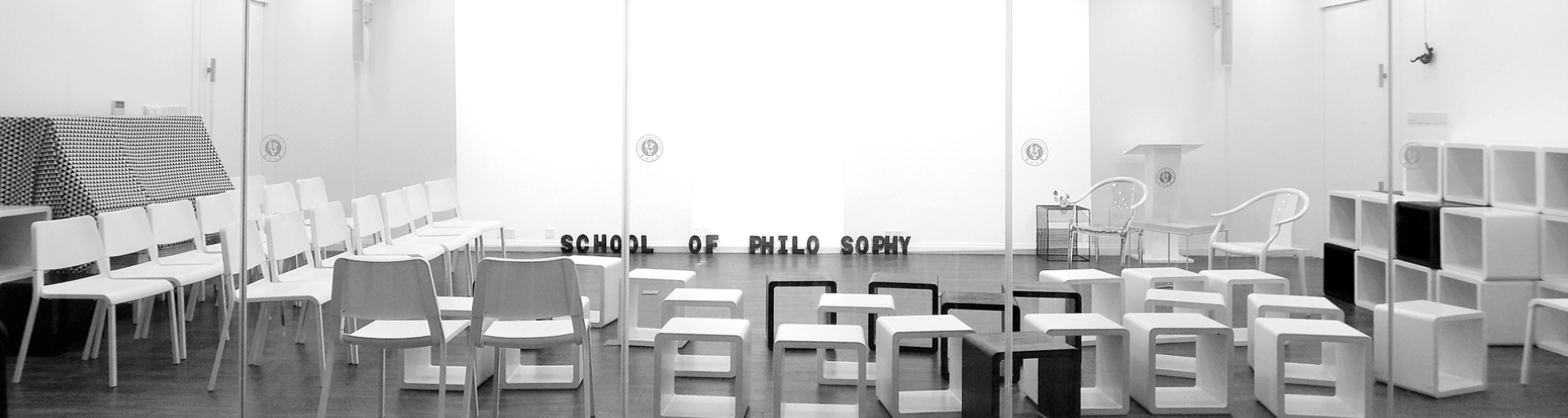
Venue:Lecture Hall, B1, Fudan University Art Museum
Tencent Meeting ID: 608 535 551;Meeting password: 200433
Organizers:School of Philosophy, Fudan University; Center for Intelligent Science and Philosophy, Fudan University
Abstract: Causal selection is the practice of singling out one or a very small number of causally relevant factors for attribution—for example, citing the match as “the cause” of a fire while omitting the presence of oxygen. I will discuss recent empirical work on causal selection from cognitive psychology and examine several proposed rationales for selection practices. These accounts include the idea that our selection practices track, in some way, optimal interventions, and the causal-strength measure proposed by Icard, Kominsky, and Knobe. Each proposal captures certain aspects of our selection practices but not others. I will also address methodological issues concerning how to determine whether one is dealing with selection phenomena and how selection relates to other forms of causal judgment. Finally, I will briefly note several selection phenomena that have been overlooked in recent empirical discussion but merit attention.
Speaker profile:
James Woodward
James Woodward is Distinguished Professor Emeritus at the University of Pittsburgh, where he taught from 2010 to 2022. Previously he held the J.O. and Juliette Koepfli Professorship at the California Institute of Technology. His work lies in general philosophy of science with a particular focus on causation and explanation. He is the author of Making Things Happen (winner of the 2005 Lakatos Award) and Causation with a Human Face (2021). Woodward is a fellow of the American Academy of Arts and Sciences and the American Association for the Advancement of Science, and in 2024 he received the Hempel Award from the Philosophy of Science Association.
Chair profile:
Liu Chuang
Liu Chuang is a Distinguished Professor at Fudan University, director of the Department of Philosophy of Science and Logic in the School of Philosophy, and director of the Center for Intelligent Science and Philosophy. He also serves as Academic Director at the Institute of Philosophy, Chinese Academy of Sciences. His main research areas include philosophy of science, philosophy of physics, and philosophy of intelligence.
Discussants’ profiles:
Zhang Jiji
Zhang Jiji is Professor in the Department of Philosophy and Associate Dean of the Faculty of Arts at The Chinese University of Hong Kong. His primary research interests are in philosophy of science and formal epistemology, especially causal reasoning.
Frederick Eberhardt
Frederick Eberhardt is Professor of Philosophy in the Division of the Humanities and Social Sciences at the California Institute of Technology. His research focuses on methods for causal inference and on how causal relations can be learned from data.